
 二叉树
二叉树
# 二叉树
# 递归序
先序遍历:头节点 左节点 右节点
中序遍历:左节点 头节点 右节点
后序遍历:左节点 右节点 头节点
	public static class Node {
		public int val;
		public Node left;
		public Node right;


		public Node(int val) {
			this.val = val;
		}

	}

	public static void f(Node head) {
		if(head == null) {
			return;
		}
		System.out.println("先序遍历"+head.val); //头节点 左节点 右节点
		f(head.left);
//		System.out.println("中序遍历"+head.val); //左节点 头节点 右节点
		f(head.right);
//		System.out.println("后序遍历"+head.val); //左节点 右节点 头节点
	}

	public static void main(String[] args) {
		Node head = new Node(1);
		head.left = new Node(2);
		head.right = new Node(3);
		head.left.left = new Node(4);
		head.left.right = new Node(5);
		head.right.left = new Node(6);
		head.right.right = new Node(8);

		f(head);

	}
2
3
4
5
6
7
8
9
10
11
12
13
14
15
16
17
18
19
20
21
22
23
24
25
26
27
28
29
30
31
32
33
34
35
# 非递归版遍历二叉树顺序
使用 Stack 类 手动压栈出栈
# 先序
- push 头节点到栈顶 再 pop 弹出并输出
- 先 push 右节点 到栈中 压为栈底
- 再 push 左节点 到栈中 压为栈顶 重复上述步骤
//先序遍历 头 左 右
public static void pre(Node head) {
	System.out.println("先序遍历");
	if(head != null) {
		Stack<Node> stack = new Stack<>();
		stack.add(head);
		while(!stack.isEmpty()) {
			head = stack.pop(); //删除栈顶
			System.out.println(head.value);
			//先push右树 压入栈底
			if(head.right != null) {
				 stack.push(head.right);
			}
			//再push左树 压入栈顶
			if(head.left != null) {
				stack.push(head.left);
			}
		}
	}
}
2
3
4
5
6
7
8
9
10
11
12
13
14
15
16
17
18
19
20
# 2 个栈实现后序
上面我们使用 1 个栈实现了,先序遍历头左右的顺序,我们知道后序遍历为左右头,我们微调一下压入左右树的顺序,实现了头右左的顺序,准备第二个栈按顺序压入,再进行弹出成了左右头的顺序。
//两个栈 实现后序遍历
public static void pos1(Node head) {
	System.out.println("后序遍历");
	if(head !=null) {
		Stack<Node> s1= new Stack<>();
		Stack<Node> s2= new Stack<>();
		s1.add(head);
		while(!s1.isEmpty()) {
			head = s1.pop();
			s2.push(head);//头节点压入栈 s2栈底
			if(head.left != null) {
				s1.push(head.left); //左节点 入s1栈底
			}
			if(head.right != null) { //右节点 入s1栈 此时为栈顶
				s1.push(head);
			}
			//此时s1栈存储为 [右,左]
			//s2栈为 [头]  两栈结合为 [左,右,头]
		}
		// 左 右 头
		while(!s2.isEmpty()) {
			System.out.println(s2.pop().value);
		}
	}
}
2
3
4
5
6
7
8
9
10
11
12
13
14
15
16
17
18
19
20
21
22
23
24
25
# 1 个栈实现后序
// 一个栈 实现后序遍历
public static void pos2(Node head) {
	System.out.println("后序遍历2");
	if (head != null) {
		Stack<Node> stack = new Stack<>();
		stack.push(head);
		Node cur = null;
		Node pre = null;
		while (!stack.isEmpty()) {
			cur = stack.peek(); // 只查看栈顶不删除
			// 不断将左树入栈 栈顶为左树的叶子节点 pre为了防止之前入过栈的左右节点 重新入栈
			if (cur.left != null && pre != cur.left && pre != cur.right) {
				stack.push(cur.left);
				// 左树无节点/已经入过栈 将右树入栈
			} else if (cur.right != null && pre != cur.right) {
				stack.push(cur.right);
			} else {
				// 左右都无节点 直接删除当前栈顶 为头节点
				System.out.println(stack.pop().value);
				pre = cur;
			}
		}
	}
}
2
3
4
5
6
7
8
9
10
11
12
13
14
15
16
17
18
19
20
21
22
23
24
# 中序
// 中序遍历 左 头 右
public static void in(Node cur) {
	System.out.println("中序遍历");
	if (cur != null) {
		Stack<Node> statck = new Stack<>();
		while (!statck.isEmpty() || cur != null) {
			if (cur != null) {
				statck.push(cur);
				cur = cur.left; // 遍历根节点 左树叶子节点 入栈
			} else {
				cur = statck.pop(); // 弹出栈
				System.out.println(cur.value);
				cur = cur.right;
			}
		}
	}

}
2
3
4
5
6
7
8
9
10
11
12
13
14
15
16
17
18
# 前缀树
# 二叉树按层变遍历
即宽度优先搜索 (BFS) 使用队列实现
//按层遍历二叉树 bfs
public static void levle(Node head) {
    if(head ==null) {
        return;
    }
    LinkedList<Node> queue = new LinkedList<>();
    queue.add(head);
    while(!queue.isEmpty()) {
        Node cur = queue.poll();
        System.out.println(cur.value);
        if(cur.left != null) {
            queue.add(head.left);
        }
        if(cur.right != null) {
            queue.add(head.right);
        }
    }
}
2
3
4
5
6
7
8
9
10
11
12
13
14
15
16
17
18
# 二叉树序列化和反序列化
# 先序遍历序列化
只有先序和后序遍历可以序列化,而中序遍历序列化时会有歧义(即两个节点位置不确定)
// 先序 序列化二叉树
public static Queue<String> preSerial(Node head) {
	if (head == null) {
		return null;
	}
	Queue<String> queue = new LinkedList<>();
	pres(head, queue);
	return queue;

}

private static void pres(Node head, Queue<String> queue) {
	if (head == null) {
		queue.add(null); // null节点 入栈
	} else {
		queue.add(String.valueOf(head.value)); // 头节点压栈
		pres(head.left, queue);
		pres(head.right, queue);
	}
}
2
3
4
5
6
7
8
9
10
11
12
13
14
15
16
17
18
19
20
# 按层遍历序列化
// 先序 反序列化二叉树
public static Node buildByPreQueue(Queue<String> queue) {
	if (queue == null || queue.size() == 0) {
		return null;
	}
	return preb(queue);
}

private static Node preb(Queue<String> queue) {
	String value = queue.poll();
	if (value == null) {
		return null;
	}
	Node head = new Node(Integer.valueOf(value));
	head.left = preb(queue);
	head.right = preb(queue);
	return head;
}
2
3
4
5
6
7
8
9
10
11
12
13
14
15
16
17
18
# 431.Encode N-ary Tree to Binary Tree (opens new window)
设计一种算法,将 N 叉树编码为二叉树,并对二叉树进行解码,得到原始 N 叉树。N-ary 树是一个有根树,其中每个节点不超过 N 个子节点。类似地,二叉树是一个有根树,其中每个节点的子节点不超过 2 个。您的编码 / 解码算法的工作方式没有限制。您只需要确保可以将 N 叉树编码为二叉树,并且可以将二叉树解码为原始的 N 叉树结构。
例如,您可以通过 3-ary 这种方式将以下树编码为二叉树:
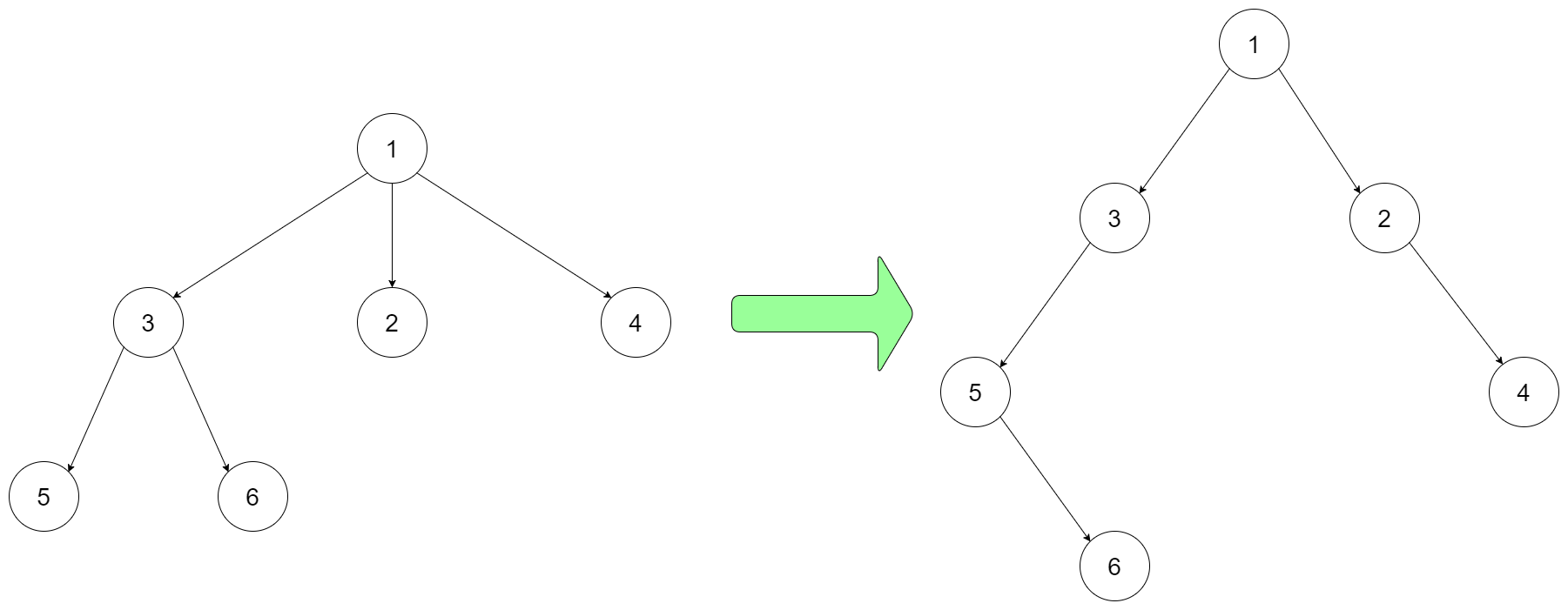
请注意,以上只是一个可能会或可能不会起作用的示例。您不一定需要遵循这种格式,因此请发挥创造力并自己提出不同的方法。
思路:
将多叉树的孩子节点 全部挂载左树的右边界
public static class Node {
	public int val;
	public List<Node> children;

	public Node() {
	}

	public Node(int _val) {
		val = _val;
	}

	public Node(int _val, List<Node> _children) {
		val = _val;
		children = _children; // 节点下所有孩子(即有多少个这个节点就有多少叉)
	}
};

public static class TreeNode {
	int val;
	TreeNode left;
	TreeNode right;

	TreeNode(int x) {
		val = x;
	}
}

class Codec {
	// 将多叉树 序列化为二叉树
	public TreeNode encode(Node root) {
		if (root == null) {
			return null;
		}
		TreeNode head = new TreeNode(root.val);// 先建立 根节点
		head.left = en(root.children); // 将孩子节点(多叉树)收为二叉树
		return head;

	}

	// 孩子节点第一个全部挂载左树 剩下的孩子节点挂载在新建左树节点的右树
	private TreeNode en(List<Node> children) {
		TreeNode head = null;
		TreeNode cur = null;
		for (Node node : children) {
			TreeNode tNode = new TreeNode(node.val); // 当前孩子 新生成节点
			if (head == null) {
				// 当前节点为孩子节点第一个节点 应为新生成的节点
				head = tNode;
			} else {
				// 否则应挂载上一个孩子节点的(head)的右树下
				head.right = tNode;
			}
			cur = head; // 缓存当前头
			cur.left = en(node.children); // 深度优先 建立根节点左树
		}

		return head;
	}

	// 将二叉树反序列化为 多叉树
	public Node decode(TreeNode root) {
		if (root == null) {
			return null;
		}
		return new Node(root.val, de(root.left));
	}

	private List<Node> de(TreeNode root) {
		ArrayList<Node> childern = new ArrayList<>();
		while (root != null) {
			Node cur = new Node(root.val, de(root.left)); //先深度优先 递归到左树叶子节点
			childern.add(cur); //将当前节点加入链表集合中
			root = root.right;  //再while循环 将当前节点(即左树)的孩子节点 不断加入集合中
		}
		return childern;
	}

}
2
3
4
5
6
7
8
9
10
11
12
13
14
15
16
17
18
19
20
21
22
23
24
25
26
27
28
29
30
31
32
33
34
35
36
37
38
39
40
41
42
43
44
45
46
47
48
49
50
51
52
53
54
55
56
57
58
59
60
61
62
63
64
65
66
67
68
69
70
71
72
73
74
75
76
77
78
# 求二叉树最大宽度
使用宽度优先搜索
public static class Node {
	public int value;
	public Node left;
	public Node right;

	public Node(int v) {
		value = v;
	}
}

public static int maxWidth(Node head) {
	if (head == null) {
		return 0;
	}
	Queue<Node> queue = new LinkedList<>();
	queue.add(head);
	int max = 0;
	int curWidth = 0; // 当前层宽度
	Node curEnd = head; // 当前层尾元素
	Node nextEnd = null; // 下一层尾元素
	while (!queue.isEmpty()) {
		Node cur = queue.poll();
		curWidth++; // 增加宽度
		if (cur.left != null) { // 是否有左右树
			queue.add(cur.left); // 入栈
			nextEnd = cur.left; // 更新下一层尾元素
		}
		if (cur.right != null) {
			queue.add(cur.right);
			nextEnd = cur.right;
		}
		if (cur == curEnd) {
			max = Math.max(max, curWidth);
			curWidth = 0; // 重置当前宽度
			curEnd = nextEnd; // 更新当前尾元素 为下一层尾元素
		}
	}
	return max;

}
2
3
4
5
6
7
8
9
10
11
12
13
14
15
16
17
18
19
20
21
22
23
24
25
26
27
28
29
30
31
32
33
34
35
36
37
38
39
40
# 求二叉树某个节点的后继节点
首先我们可以通过中序遍历的方式 知道某个节点的后续节点 根据中序遍历 (左 头 右) 的规则我们可以推断出
- 如果 x 节点有右树 后继节点为右孩子 最深的左节点
- 如果 x 节点为无右树 后继节点为离 x 节点最近的父辈节点并且该父辈节点以左节点形式存在
- 不断往上找父辈节点 并且此父辈节点是以左孩子形式存在 此时会命中
parent.rigth != nodewhile 循环结束 返回此父辈节点为后继节点 - 不断往上找父辈节点 但父辈节点全为右孩子形式 此时会命中
parent == nullwhile 循环结束 此时会返回父辈节点 (此时父辈节点为 null 当前节点没有后继节点)
- 不断往上找父辈节点 并且此父辈节点是以左孩子形式存在 此时会命中
- 如果 x 节点无右树并为左节点 后续节点为父节点
根据上述规则我们可以给每个节点添加一个 parent 指针 (存储为父节点地址),通过 parent 指针可以找到此节点的父节点
	public static class Node {
		public int value;
		public Node left;
		public Node right;
		public Node parent;

		public Node(int data) {
			this.value = data;
		}
	}

	public static Node getSuccessorNode(Node node) {
		if (node == null) {
			return null;
		}

		// 如果查找的节点存在右孩子 查询右树的最深的左树
		if (node.right != null) {
			return getLeftMost(node.right);
		} else {
			// 如果查找的节点不存在右孩子
			Node parent = node.parent;//查询节点的父节点
			/**
			 * 1.如果当前查找节点为父节点的左孩子 while循环不成立 直接返回父节点即可
			 * 2.如果当前查找节点为父节点的右孩子 while循环成立 查找最近的父辈节点并且该父辈节点以左节点形式存在
			 * 	2.1 不断往上找父辈节点 并且此父辈节点是以左孩子形式存在 此时会命中 `parent.rigth != node`while循环结束 返回此父辈节点为后继节点
			 * 	2.2不断往上找父辈节点 但父辈节点全为右孩子形式 此时会命中 `parent == null`while循环结束 此时会返回父辈节点(此时父辈节点为null 当前节点没有后继节点)
			 */
			while (parent != null && parent.right == node) {
				node = parent;
				parent = node.parent;
			}
			return parent;
		}

	}

	private static Node getLeftMost(Node node) {
		while (node.left != null) {
			node = node.left; // 最深的 左节点
		}
		return node;
	}
2
3
4
5
6
7
8
9
10
11
12
13
14
15
16
17
18
19
20
21
22
23
24
25
26
27
28
29
30
31
32
33
34
35
36
37
38
39
40
41
42
43
# 折纸问题
请把一段纸条竖着放在桌子上,然后从纸条的下边向上方对折 1 次,压出折痕后展开 此时折痕是凹下去的,即折痕突起的方向指向纸条的背面 如果从纸条的下边向上方连续对折 2 次,压出折痕后展开 此时有三条折痕,从上到下依次是下折痕、下折痕和上折痕。 给定一个输入参数 N,代表纸条都从下边向上方连续对折 N 次 请从上到下打印所有折痕的方向。 N=1 时,打印: down N=2 时,打印: down down up
思路:
其实为一个比较特殊的二叉树的中序遍历,头节点为凹,左子树必定为凹,右子树必定为凸,满足以上条件中序遍历既可。
	public static void printAllFolds(int N) {
		process(1, N, true);
		System.out.println();
	}

	// 当前你来了一个节点,脑海中想象的!
	// 这个节点在第i层,一共有N层,N固定不变的
	// 这个节点如果是凹的话,down = T
	// 这个节点如果是凸的话,down = F
	// 函数的功能:中序打印以你想象的节点为头的整棵树!
	public static void process(int i, int N, boolean down) {
		if (i > N) {
			return;
		}
		process(i + 1, N, true);
		System.out.print(down ? "凹 " : "凸 ");
		process(i + 1, N, false);
	}

	public static void main(String[] args) {
		int N = 4;
		printAllFolds(N);
	}
2
3
4
5
6
7
8
9
10
11
12
13
14
15
16
17
18
19
20
21
22
23
# 判断是否为完全二叉树
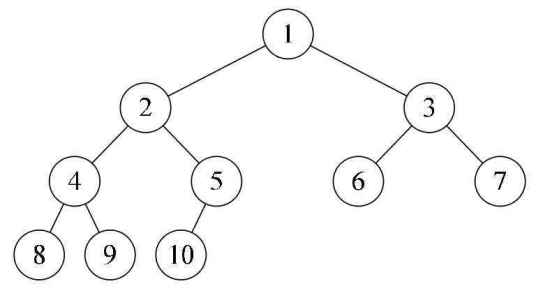
一棵深度为 k 的有 n 个结点的二叉树,对树中的结点按从上至下、从左到右的顺序进行编号,如果编号为 i(1≤i≤n)的结点与满二叉树中编号为 i 的结点在二叉树中的位置相同,则这棵二叉树称为完全二叉树。
特征: 叶子结点只可能在最大的两层出,即叶子节点从左到右中间不可能出现空缺,要么出现在最后第二层和第一层。如叶子节点往下遇到 null 后往后的叶子节点左右节点必须为 null,满足此规则即可。
如下图所示
	public static class Node {
		public int value;
		public Node left;
		public Node right;

		public Node(int data) {
			this.value = data;
		}
	}

	public static boolean isCBT1(Node head) {
		if (head == null) {
			return true;//空树 也为完全二叉树
		}
		LinkedList<Node> queue = new LinkedList<>();
		// 是否遇到过左右两个孩子不双全的节点 标记变量
		boolean leaf = false;
		Node l = null;
		Node r = null;
		queue.add(head); //入队列
		while (!queue.isEmpty()) {
			head = queue.poll();
			l = head.left;
			r = head.right;
			if (
			// 如果遇到了不双全的节点之后,又发现当前节点不是叶节点
			    (leaf && (l != null || r != null)) //leaf变为true 说明之前遇到了null节点
			    ||
			    (l == null && r != null) //左树为null 右树不为null 根节点出现空缺返回false

			) {
				return false;
			}
            //有左孩子 入队列
			if (l != null) {
				queue.add(l);
			}
            //有右孩子 入队列
			if (r != null) {
				queue.add(r);
			}
            //因为是按层遍历 到根节点了 标记变量改为true
			if (l == null || r == null) {
				leaf = true;
			}
		}
		return true;
	}
2
3
4
5
6
7
8
9
10
11
12
13
14
15
16
17
18
19
20
21
22
23
24
25
26
27
28
29
30
31
32
33
34
35
36
37
38
39
40
41
42
43
44
45
46
47
48
# 二叉树的递归套路
- 假设以 X 节点为头,假设可以向 X 左树和 X 右树要任何信息
- 在上一步的假设下,讨论以 X 为头节点的树,得到答案的可能性(最重要)
- 列出所有可能性后,确定到底需要向左树和右树要什么样的信息
- 把左树信息和右树信息求全集,就是任何一棵子树都需要返回的信息 S
- 递归函数都返回 S,每一棵子树都这么要求
- 写代码,在代码中考虑如何把左树的信息和右树信息整合出整棵树的信息
# 求二叉树最大距离
给定一棵二叉树的头节点 head,任何两个节点之间都存在距离,返回整棵二叉树的最大距离
最大距离必须为最优路径
- 最大距离存在左树中 不经过根节点
- 最大距离存在右树中 不经过根节点
- 最大距离不存在左右树中 必经过根节点 左树高度 + 右树高度 + 1
	public static class Node {
		public int value;
		public Node left;
		public Node right;

		public Node(int data) {
			this.value = data;
		}
	}

	public static class info{
		public int maxDistance; //最大距离
		public int height; //高度
		public info(int maxDistance, int height) {
			this.maxDistance = maxDistance;
			this.height = height;
		}

	}

	public static int  maxDistance2(Node head) {
		return process(head).maxDistance;
	}

	//深度优先
	private static info process(Node head) {
		if(head == null) {
			return new info(0, 0); //为空null 高度为0 最大距离为0
		}
		info leftInfo = process(head.left);
		info rightInfo = process(head.right);
		int height = Math.max(leftInfo.height, rightInfo.height)+1; //高度更新
		int p1 = leftInfo.maxDistance;
		int p2 = rightInfo.maxDistance;
		// 如为叶子节点 则会命中此语句 携带此数 递归下去 找到最大距离
		int p3 = leftInfo.height + rightInfo.height + 1;
		int maxDistance = Math.max(Math.max(p1, p2), p3); //最大距离
		return new info(maxDistance,height); //返回 携带信息
	}
2
3
4
5
6
7
8
9
10
11
12
13
14
15
16
17
18
19
20
21
22
23
24
25
26
27
28
29
30
31
32
33
34
35
36
37
38
39
# 判断是否为满二叉树
判断方法一:收集整颗树的高度和节点数,只有满二叉树满足
判断方法二:左树 和 右树为满,并且左右树高度一致,则为满二叉树
	public static class Node {
		public int value;
		public Node left;
		public Node right;

		public Node(int data) {
			this.value = data;
		}
	}

	public static class info1 {
		int height;
		int nodes;

		public info1(int height, int nodes) {
			this.height = height;
			this.nodes = nodes;
		}

	}

	// 只有满二叉树满足 : 2 ^ h - 1 == n
	public static boolean isFull1(Node head) {
		if (head == null) {
			return true;
		}
		info1 allInfo = process1(head);
		return (1 << allInfo.height) - 1 == allInfo.nodes;

	}

	private static info1 process1(Node head) {
		if (head == null) {
			return new info1(0, 0); // 节点空返回高度0节点数0
		}

		info1 leftInfo = process1(head.left); // 获取左右树信息
		info1 rightInfo = process1(head.right);
		int height = Math.max(leftInfo.height, rightInfo.height) + 1; // 获取最大高度 +自身
		int nodes = leftInfo.nodes + rightInfo.nodes + 1; // 左右节点数 +自身
		return new info1(height, nodes); // 返回给上层
	}

	// 左树满 && 右树满 && 左右树高度一样 -> 整棵树是满的
	public static boolean isFull2(Node head) {
		if (head == null) {
			return true;
		}
		return process2(head).isFull;

	}

	public static class info2 {
		public boolean isFull;
		public int height;

		public info2(boolean isFull, int height) {
			this.isFull = isFull;
			this.height = height;
		}

	}

	private static info2 process2(Node head) {
		if (head == null) {
			return new info2(true, 0);
		}
		info2 leftInfo = process2(head.left);
		info2 rightInfo = process2(head.right);
		boolean isFull = leftInfo.isFull && rightInfo.isFull && leftInfo.height == rightInfo.height;
		int height = Math.max(leftInfo.height, rightInfo.height) + 1;

		return new info2(isFull, height);

	}
2
3
4
5
6
7
8
9
10
11
12
13
14
15
16
17
18
19
20
21
22
23
24
25
26
27
28
29
30
31
32
33
34
35
36
37
38
39
40
41
42
43
44
45
46
47
48
49
50
51
52
53
54
55
56
57
58
59
60
61
62
63
64
65
66
67
68
69
70
71
72
73
74
75
# 求二叉树中最大的二叉搜索子树的大小
给定一棵二叉树的头节点 head,返回这颗二叉树中最大的二叉搜索子树的大小
	public static class Node {
		public int value;
		public Node left;
		public Node right;

		public Node(int data) {
			this.value = data;
		}
	}

	public static class info {
		public int maxBSTSubtreeSize;// 最大搜索子树大小
		public int allSize;// 所有子节点数量
		public int max;
		public int min;

		public info(int maxBSTSubtreeSize, int allSize, int max, int min) {
			this.maxBSTSubtreeSize = maxBSTSubtreeSize;
			this.allSize = allSize;
			this.max = max;
			this.min = min;
		}
	}

	public static info process(Node head) {
		if (head == null) {
			return null;
		}

		info leftInfo = process(head.left);
		info rightInfo = process(head.right);
		int max = head.value; // 假设为自身
		int min = head.value;
		int allSize = 1; // 所有字节节数 算上自身
		if (leftInfo != null) {
			max = Math.max(max, leftInfo.max);
			min = Math.min(min, leftInfo.min);
			allSize += leftInfo.allSize; // 加上左树的子节点数
		}
		if (rightInfo != null) {
			max = Math.max(max, rightInfo.max);
			min = Math.min(min, rightInfo.min);
			allSize += rightInfo.allSize; //加上右树的字节点数
		}

		int p1 = -1;
		if (leftInfo != null) {
			p1 = leftInfo.maxBSTSubtreeSize;
		}
		int p2 = -1;
		if (rightInfo != null) {
			p2 = rightInfo.maxBSTSubtreeSize;
		}
		int p3 = -1;
		//判断最大子树大小 与 所有节点数 是否相等(即没有断层)
		boolean leftBst = leftInfo == null ? true : (leftInfo.maxBSTSubtreeSize == leftInfo.allSize);
		boolean rightBst = rightInfo == null ? true : (rightInfo.maxBSTSubtreeSize == rightInfo.allSize);
		if (leftBst && rightBst) {
			// 验证当前节点是否满足二叉树规则 左孩子比自身小 右孩子比自身大
			boolean leftMaxLeesX = leftInfo == null ? true : (leftInfo.max < head.value);
			boolean rightMinMoreX = rightInfo == null ? true : (head.value < rightInfo.min);
			if (leftMaxLeesX && rightMinMoreX) {
				//如果最大搜索子树大小没断层 并且满足搜索二叉树规则 进行递加
				int leftSize = leftInfo == null ? 0 : leftInfo.allSize;
				int rightSize = rightInfo == null ? 0 : rightInfo.allSize;
				p3 = leftSize + rightSize + 1;
			}
		}
		return new info(Math.max(p1, Math.max(p2, p3)), allSize, max, min);
	}


	public static int maxSubBSTSize2(Node head) {
		if(head == null) {
			return 0;
		}
		return process(head).maxBSTSubtreeSize;
	}
2
3
4
5
6
7
8
9
10
11
12
13
14
15
16
17
18
19
20
21
22
23
24
25
26
27
28
29
30
31
32
33
34
35
36
37
38
39
40
41
42
43
44
45
46
47
48
49
50
51
52
53
54
55
56
57
58
59
60
61
62
63
64
65
66
67
68
69
70
71
72
73
74
75
76
77
78
# 递归套路版判断是否为完全二叉树
上面我们使用队列按层遍历 (bfs) 来判断是否为完全二叉树,我们可以改为递归版本使用递归套路
# 求二叉树最大的二叉搜索树的头节点
给定一棵二叉树的头节点 head,返回这颗二叉树中最大的二叉搜索子树的头节点
# 求二叉树上 a 和 b 两节点的最低公共祖先
给定一棵二叉树的头节点 head,和另外两个节点 a 和 b,返回 a 和 b 的最低公共祖先
public static class Node {
		public int value;
		public Node left;
		public Node right;

		public Node(int data) {
			this.value = data;
		}
	}

	public static class info {
		boolean findA;
		boolean findB;
		Node ans;

		public info(boolean findA, boolean findB, Node ans) {
			this.findA = findA;
			this.findB = findB;
			this.ans = ans;
		}

	}

	public static Node lowestAncestor2(Node head, Node a, Node b) {
		if (head == null) {
			return null;
		}
		return process(head, a, b).ans;
	}

	private static info process(Node head, Node a, Node b) {
		if (head == null) {
			return new info(false, false, null); // 空节点 返回info信息
		}
		info leftInfo = process(head.left, a, b); // 递归下去
		info rightInfo = process(head.right, a, b);
		boolean findA = (head == a) || leftInfo.findA || rightInfo.findA; // 如果a/b为自身 或者 左右info之前发现过a/b为true
		boolean findB = (head == b) || leftInfo.findB || rightInfo.findB;
		Node ans = null; // 先初始化
		if (findA && findB) { // a和b都标记找到
			if (leftInfo.ans != null) { // 之前leftInfo有标记过祖先,继承之前的祖先,因为题目要求是最低祖先(最先找到的祖先)
				ans = leftInfo.ans;
			} else if (rightInfo.ans != null) { // right同理
				ans = rightInfo.ans;
			} else {
				ans = head; // 之前都没有标记过祖先 即当前节点为最先发现的祖先
			}
		}
		return new info(findA, findB, ans); // 返回info信息
	}
2
3
4
5
6
7
8
9
10
11
12
13
14
15
16
17
18
19
20
21
22
23
24
25
26
27
28
29
30
31
32
33
34
35
36
37
38
39
40
41
42
43
44
45
46
47
48
49
50
# 派对的最大快乐值
公司的每个员工都符合 Employee 类的描述。整个公司的人员结构可以看作是一棵标准的、 没有环的多叉树 树的头节点是公司唯一的老板,除老板之外的每个员工都有唯一的直接上级 叶节点是没有任何下属的基层员工 (subordinates 列表为空),除基层员工外每个员工都有一个或多个直接下级 这个公司现在要办 party,你可以决定哪些员工来,哪些员工不来,规则:
如果某个员工来了,那么这个员工的所有直接下级都不能来
派对的整体快乐值是所有到场员工快乐值的累加
你的目标是让派对的整体快乐值尽量大
给定一棵多叉树的头节点 boss,请返回派对的最大快乐值。
public static class Employee {
		public int happy;
		public List<Employee> nexts;

		public Employee(int h) {
			happy = h;
			nexts = new ArrayList<>();
		}

	}

	public static class info {
		int no; // 当前节点不来的情况
		int yes; // 当前节点来的情况

		public info(int no, int yes) {
			super();
			this.no = no;
			this.yes = yes;
		}

	}

	public static int maxHappy2(Employee head) {
		info allInfo = process(head);
		return Math.max(allInfo.no, allInfo.yes);
	}

	private static info process(Employee head) {
		if (head == null) {
			return new info(0, 0);
		}
		int no = 0;// 不来的情况
		int yes = head.happy; // 来的情况
		for (Employee employee : head.nexts) {
			info nextInfo = process(employee);
			no += Math.max(nextInfo.no, nextInfo.yes);// 子节点可来可不来
			yes += nextInfo.no; // 当前节点来了 他的下属子节点必须得不来
		}
		return new info(no, yes);
	}
2
3
4
5
6
7
8
9
10
11
12
13
14
15
16
17
18
19
20
21
22
23
24
25
26
27
28
29
30
31
32
33
34
35
36
37
38
39
40
41
# 100. 相同的树 (opens new window)
	public class TreeNode {
		int val;
		TreeNode left;
		TreeNode right;

		TreeNode() {
		}

		TreeNode(int val) {
			this.val = val;
		}

		TreeNode(int val, TreeNode left, TreeNode right) {
			this.val = val;
			this.left = left;
			this.right = right;
		}
	}

	class Solution {
		public boolean isSameTree(TreeNode p, TreeNode q) {
			if (p == null ^ q == null) { //有一个为空 另外一个不为空 返回
				return false;
			}
			if (p == null && q == null) { //两者都为空
				return true;
			}
			//两者值相等 && 左树相等 && 右树相等
			return p.val == q.val && isSameTree(p.left, q.left) && isSameTree(p.right, q.right);
		}
	}
2
3
4
5
6
7
8
9
10
11
12
13
14
15
16
17
18
19
20
21
22
23
24
25
26
27
28
29
30
31
# 101. 对称二叉树 (opens new window)
	public class TreeNode {
	    int val;
	    TreeNode left;
	    TreeNode right;
	    TreeNode() {}
	    TreeNode(int val) { this.val = val; }
	    TreeNode(int val, TreeNode left, TreeNode right) {
	        this.val = val;
	        this.left = left;
	        this.right = right;
	    }
	}

	class Solution {
	    public boolean isSymmetric(TreeNode root) {
	    	return isSameTree(root,root);//自己与自己比较
	    }

	    public boolean isSameTree(TreeNode p, TreeNode q) {
			if (p == null ^ q == null) { //有一个为空 另外一个不为空 返回
				return false;
			}
			if (p == null && q == null) { //两者都为空
				return true;
			}
			//两者值相等 && 左树与`右树相等 && 右树与`左树相等
			return p.val == q.val && isSameTree(p.left, q.right) && isSameTree(p.right, q.left);
		}
	}
2
3
4
5
6
7
8
9
10
11
12
13
14
15
16
17
18
19
20
21
22
23
24
25
26
27
28
29
# 104. 二叉树的最大深度 (opens new window)
	public class TreeNode {
		int val;
		TreeNode left;
		TreeNode right;

		TreeNode() {
		}

		TreeNode(int val) {
			this.val = val;
		}

		TreeNode(int val, TreeNode left, TreeNode right) {
			this.val = val;
			this.left = left;
			this.right = right;
		}
	}

	class Solution {
		public int maxDepth(TreeNode root) {
			if (root == null) {
				return 0;
			}
			return Math.max(maxDepth(root.left), maxDepth(root.right)) + 1;
		}
	}
2
3
4
5
6
7
8
9
10
11
12
13
14
15
16
17
18
19
20
21
22
23
24
25
26
27
# 105. 从前序与中序遍历序列构造二叉树 (opens new window)
	public class TreeNode {
		int val;
		TreeNode left;
		TreeNode right;

		TreeNode() {
		}

		TreeNode(int val) {
			this.val = val;
		}

		TreeNode(int val, TreeNode left, TreeNode right) {
			this.val = val;
			this.left = left;
			this.right = right;
		}
	}

	class Solution {

		public TreeNode buildTree(int[] preorder, int[] inorder) {
			if (preorder == null || inorder == null || preorder.length != inorder.length) {
				return null;
			}
             Map<Integer, Integer> IndexMap = new HashMap<>();
			for (int i = 0; i < inorder.length; i++) {
				IndexMap.put(inorder[i], i);
			}

			return f(preorder, 0, preorder.length - 1, inorder, 0, inorder.length - 1,IndexMap);
		}

		private TreeNode f(int[] preorder, int l1, int r1, int[] inorder, int l2, int r2,Map<Integer, Integer> IndexMap) {
			if (l1 > r1) { //
				return null;
			}
			TreeNode head = new TreeNode(preorder[l1]); // 头节点
			if (l1 == r1) { // 只有一个元素时
				return head;
			}
			int index = IndexMap.get(preorder[l1]); // 查找当前头节点在中序遍历数组的位置
			// 左树构建 l1+1到 l1 + index - l2 为左树的先序遍历范围 		l2到index-1为中序遍历范围
			head.left = f(preorder, l1 + 1, l1 + index - l2, inorder, l2, index - 1,IndexMap); // 注意左树和右树构建采用的遍历范围均相同长度
			// 右树构建 l1 + index - l2(即左树的结束范围) +1 到 r1为右树先序遍历范围 		index+1到r2为右树中序遍历的范围
			head.right = f(preorder, l1 + index - l2 + 1, r1, inorder, index + 1, r2,IndexMap);
			return head;
		}
	}
2
3
4
5
6
7
8
9
10
11
12
13
14
15
16
17
18
19
20
21
22
23
24
25
26
27
28
29
30
31
32
33
34
35
36
37
38
39
40
41
42
43
44
45
46
47
48
49
# 107. 二叉树的层序遍历 II (opens new window)
public class TreeNode {
		int val;
		TreeNode left;
		TreeNode right;

		TreeNode() {
		}

		TreeNode(int val) {
			this.val = val;
		}

		TreeNode(int val, TreeNode left, TreeNode right) {
			this.val = val;
			this.left = left;
			this.right = right;
		}
	}

	class Solution {
		public List<List<Integer>> levelOrderBottom(TreeNode root) {
			List<List<Integer>> ans = new ArrayList<>();
			if (root == null) { // 根节点为空直接返回空列表
				return ans;
			}
			LinkedList<TreeNode> queue = new LinkedList<>();
			queue.add(root); // 将头节点加入队列中
			while (!queue.isEmpty()) {
				int size = queue.size(); // 获取队列当前长度
				List<Integer> tans = new LinkedList<>();
				for (int i = 0; i < size; i++) {
					TreeNode temp = queue.poll();
					tans.add(temp.val); // 获取头节点的值 放入局部队列中
					if (temp.left != null) {
						queue.add(temp.left); // 左节点非空 加入到队列中
					}
					if (temp.right != null) {
						queue.add(temp.right); // 右节点非空 加入队列中
					}

				}
				ans.add(0, tans); // 将上次队列缓存头节点清空后的节点值加入到结果集合中
			}
			return ans;

		}
	}
2
3
4
5
6
7
8
9
10
11
12
13
14
15
16
17
18
19
20
21
22
23
24
25
26
27
28
29
30
31
32
33
34
35
36
37
38
39
40
41
42
43
44
45
46
47
# 110. 平衡二叉树 (opens new window)
平衡二叉树:一个二叉树每个节点 的左右两个子树的高度差的绝对值不超过 1 。
	public class TreeNode {
		int val;
		TreeNode left;
		TreeNode right;

		TreeNode() {
		}

		TreeNode(int val) {
			this.val = val;
		}

		TreeNode(int val, TreeNode left, TreeNode right) {
			this.val = val;
			this.left = left;
			this.right = right;
		}
	}

	class Solution {
		public boolean isBalanced(TreeNode root) {
			return process(root).isBalanced; //直接返回root节点的信息
		}

		public class info {
			public boolean isBalanced; // 是否为平衡二叉树
			public int height; // 高度

			public info(boolean isBalanced, int height) {
				this.isBalanced = isBalanced;
				this.height = height;
			}

		}

		public info process(TreeNode root) {
			if (root == null) { // 空节点
				return new info(true, 0);
			}
			info leftInfo = process(root.left); // 左树信息
			info rightInfo = process(root.right); // 右树信息

			int height = Math.max(leftInfo.height, rightInfo.height) + 1; // 当前节点高度为 左和右树最大值 +1
			boolean isBalanced = leftInfo.isBalanced && rightInfo.isBalanced
					&& Math.abs(leftInfo.height - rightInfo.height) <= 1; //左树和右树为平衡二叉树 并且 左右树高度差不大于1
			return new info(isBalanced, height);
		}

	}
2
3
4
5
6
7
8
9
10
11
12
13
14
15
16
17
18
19
20
21
22
23
24
25
26
27
28
29
30
31
32
33
34
35
36
37
38
39
40
41
42
43
44
45
46
47
48
49
# 98. 验证二叉搜索树 (opens new window)
搜索二叉树: 左树的值比根节点的值小,右树的值比根节点的值大
一颗搜索二叉树中序遍历是递增顺序
	public class TreeNode {
		int val;
		TreeNode left;
		TreeNode right;

		TreeNode() {
		}

		TreeNode(int val) {
			this.val = val;
		}

		TreeNode(int val, TreeNode left, TreeNode right) {
			this.val = val;
			this.left = left;
			this.right = right;
		}
	}

	class Solution {
		public boolean isValidBST(TreeNode root) {
			return isBST(root).isBst;
		}

		public class info{
			boolean isBst;
			int max;
			int min;
			public info(boolean isBst, int max, int min) {
				this.isBst = isBst;
				this.max = max;
				this.min = min;
			}

		}

		public info isBST(TreeNode root) {
			if(root == null) { //头节点为空则返回空
				return null;
			}
			info leftinfo = isBST(root.left); //递归进入左树
			info rightinfo = isBST(root.right); //递归进入右树

			int max = root.val; //假设最大值为自身
			int min = root.val;//假设最小值为自身
			if(leftinfo != null) { //左树非空
				max = Math.max(max, leftinfo.max); //提取左树信息
				min = Math.min(min, leftinfo.min);
			}
			if(rightinfo != null) {
				max = Math.max(max, rightinfo.max); //提取右树信息
				min = Math.min(min, rightinfo.min);
			}

			boolean bst = true; //先假设为搜索二叉树
			if(leftinfo !=null && !leftinfo.isBst) { //如果左树不满足则 头节点标记为不是二叉树
				bst =false;
			}
			if(rightinfo !=null && !rightinfo.isBst) { //如果右树不满足则 头节点标记为不是二叉树
				bst =false;
			}


			boolean lefiBst = leftinfo == null ? true : (leftinfo.max < root.val); //如果左树信息为空返回ture  否则左树最大值必须小于当前节点值
			boolean rightBst = rightinfo == null ? true : (rightinfo.min > root.val);//如果右树信息为空返回ture  否则右树最小值必须大于当前节点值
			if(!lefiBst || !rightBst) { //不满足搜索二叉树规则
				bst = false;
			}

			return new info(bst, max, min);
		}

	}
2
3
4
5
6
7
8
9
10
11
12
13
14
15
16
17
18
19
20
21
22
23
24
25
26
27
28
29
30
31
32
33
34
35
36
37
38
39
40
41
42
43
44
45
46
47
48
49
50
51
52
53
54
55
56
57
58
59
60
61
62
63
64
65
66
67
68
69
70
71
72
73
# 112. 路径总和 (opens new window)
public class TreeNode {
		int val;
		TreeNode left;
		TreeNode right;

		TreeNode() {
		}

		TreeNode(int val) {
			this.val = val;
		}

		TreeNode(int val, TreeNode left, TreeNode right) {
			this.val = val;
			this.left = left;
			this.right = right;
		}
	}

	class Solution {

		public boolean isSum = false;

		public boolean hasPathSum(TreeNode root, int targetSum) {
			if(root ==null) { //根节点为空 直接返回false
				return false;
			}
			tree(root, 0, targetSum);
			return isSum;

		}

		public void tree(TreeNode root, int preSum, int sum) {
			if (root.left == null && root.right == null) { //当前头节点左右子节点都为空
				if (preSum + root.val == sum) { //当前头节点值与上次sum 为target则找到
					isSum = true;
				}
				return;
			}

			preSum += root.val; //累加当前sum
			if (root.left != null) { //左节点有叶节点 递归进去
				tree(root.left, preSum, sum);
			}
			if (root.right != null) { //右节点有叶节点 递归进去
				tree(root.right, preSum, sum);
			}
		}
	}
2
3
4
5
6
7
8
9
10
11
12
13
14
15
16
17
18
19
20
21
22
23
24
25
26
27
28
29
30
31
32
33
34
35
36
37
38
39
40
41
42
43
44
45
46
47
48
49
# 113. 路径总和 II (opens new window)
	public class TreeNode {
		int val;
		TreeNode left;
		TreeNode right;

		TreeNode() {
		}

		TreeNode(int val) {
			this.val = val;
		}

		TreeNode(int val, TreeNode left, TreeNode right) {
			this.val = val;
			this.left = left;
			this.right = right;
		}
	}

	class Solution {
		public List<List<Integer>> pathSum(TreeNode root, int targetSum) {
			List<List<Integer>> ans = new ArrayList<>();
			if (root == null) {
				return ans;
			}
			ArrayList<Integer> path = new ArrayList<>();
			process(root, path, 0, targetSum, ans);
			return ans;
		}

		public void process(TreeNode root, ArrayList<Integer> path, int preSum, int sum, List<List<Integer>> ans) {
			if (root.left == null & root.right == null) {
				if (root.val + preSum == sum) {
					path.add(root.val); // 添加当前节点路径
//					List<Integer> newPath = copy(path); // 拷贝
					List<Integer> newPath = (List<Integer>) path.clone(); // 本质上是浅拷贝 但里面存储的是值 所以复制了里面值 如里面存储的是引用不应用深拷贝

					ans.add(newPath); // 添加到结果集合中
					path.remove(path.size() - 1); // 删除当前路径
				}
			}
			preSum += root.val; // 累加 无需回溯 因为是值传递 不是引用传递
			path.add(root.val); // 记录节点
			if (root.left != null) { // 递归
				process(root.left, path, preSum, sum, ans);
			}
			if (root.right != null) { // 递归
				process(root.right, path, preSum, sum, ans);
			}
			path.remove(path.size() - 1); // 恢复现场
		}

	}
2
3
4
5
6
7
8
9
10
11
12
13
14
15
16
17
18
19
20
21
22
23
24
25
26
27
28
29
30
31
32
33
34
35
36
37
38
39
40
41
42
43
44
45
46
47
48
49
50
51
52
53