
 迭代器(Iterator)模式
# 迭代器(Iterator)模式
提供 ** 一个对象 (迭代器) 来顺序访问聚合对象 (迭代数据)** 中的一系列数据,而不暴露聚合对象的内部表示。对象行为型模式
- 抽象聚合(Aggregate)角色:定义存储、添加、删除聚合对象以及创建迭代器对象的接口。
- 具体聚合(ConcreteAggregate)角色:实现抽象聚合类,返回一个具体迭代器的实例。
- 抽象迭代器(Iterator)角色:定义访问和遍历聚合元素的接口,通常包含 hasNext ()、first ()、next () 等方法。
- 具体迭代器(Concretelterator)角色:实现抽象迭代器接口中所定义的方法,完成对聚合对象的遍历,记录遍历的当前位置。
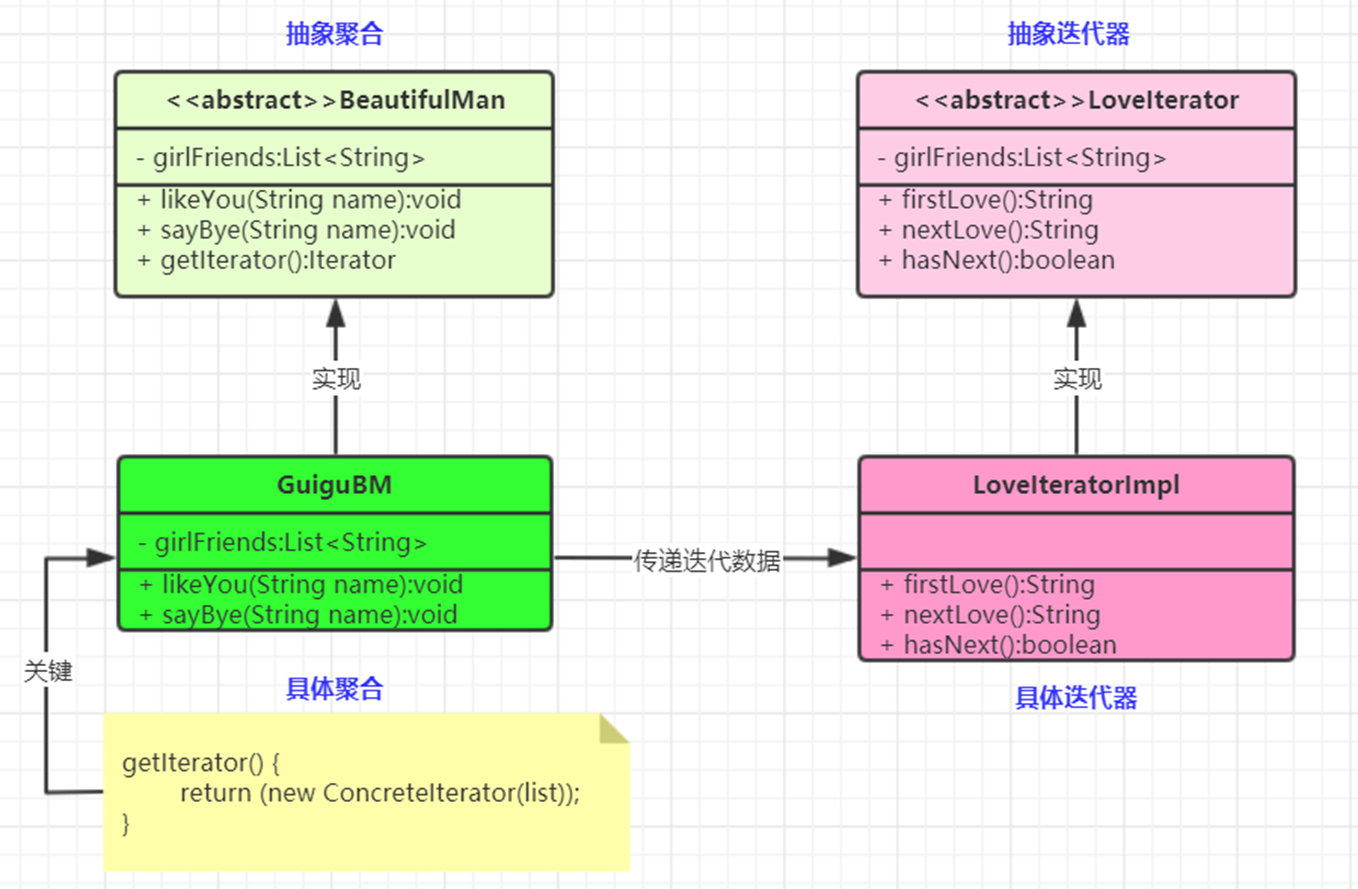
抽象聚合(Aggregate)角色:定义存储、添加、删除聚合对象以及创建迭代器对象的接口。
public abstract class BeautifulMan {
    // 不方便暴露给外界的集合,只允许外界获取而不可以操作
    private List<String> girlFriends = new ArrayList<>();

    void likeYou(String name) {
        girlFriends.add(name);
    }

    void sayBye(String name) {
        girlFriends.remove(name);
    }

    public Itr getIterator() {
        return new Iterator(girlFriends);
    }


}
1
2
3
4
5
6
7
8
9
10
11
12
13
14
15
16
17
18
2
3
4
5
6
7
8
9
10
11
12
13
14
15
16
17
18
具体聚合(ConcreteAggregate)角色:实现抽象聚合类,返回一个具体迭代器的实例。
public class MaYuCheng extends BeautifulMan{

}
1
2
3
2
3
抽象迭代器(Iterator)角色:定义访问和遍历聚合元素的接口,通常包含 hasNext ()、first ()、next () 等方法。
/**
 * 抽象迭代器
 */
public interface Itr {
    boolean hasNext();

    String next();

    // 返回第一个
    String firstLove();

    // 返回当前
    String current();
}
1
2
3
4
5
6
7
8
9
10
11
12
13
14
2
3
4
5
6
7
8
9
10
11
12
13
14
具体迭代器(Concretelterator)角色:实现抽象迭代器接口中所定义的方法,完成对聚合对象的遍历,记录遍历的当前位置。
/**
 * 具体迭代器
 */
public class Iterator implements Itr {
    private int cursor = 0; // 当前指针

    private List<String> girlFriends;

    public Iterator(List<String> girlFriends) {
        this.girlFriends = girlFriends;
    }

    public boolean hasNext() {
        if (cursor >= girlFriends.size()) {
            return false;
        }
        return true;
    }

    public String next() {
        if (cursor >= girlFriends.size()) {
            return null;
        }
        String s = girlFriends.get(cursor);
        // 指针偏移
        cursor++;
        return s;
    }

    @Override
    public String firstLove() {
        if (girlFriends.size() <= 0) {
            return null;
        }
        return girlFriends.get(0);
    }

    @Override
    public String current() {
        if (girlFriends == null) {
            return null;
        }
        return girlFriends.get(girlFriends.size() - 1);
    }
}
1
2
3
4
5
6
7
8
9
10
11
12
13
14
15
16
17
18
19
20
21
22
23
24
25
26
27
28
29
30
31
32
33
34
35
36
37
38
39
40
41
42
43
44
45
2
3
4
5
6
7
8
9
10
11
12
13
14
15
16
17
18
19
20
21
22
23
24
25
26
27
28
29
30
31
32
33
34
35
36
37
38
39
40
41
42
43
44
45
测试
public class MainTest {
    public static void main(String[] args) {
        MaYuCheng maYuCheng = new MaYuCheng();
        maYuCheng.likeYou("张三");
        maYuCheng.likeYou("李四");
        maYuCheng.likeYou("王五");

        Itr iterator = maYuCheng.getIterator();
        System.out.println(iterator.firstLove());
        System.out.println(iterator.hasNext());
        System.out.println(iterator.next());
        System.out.println(iterator.current());

        while (iterator.hasNext()){
            System.out.println(iterator.next());
        }
    }
}
1
2
3
4
5
6
7
8
9
10
11
12
13
14
15
16
17
18
2
3
4
5
6
7
8
9
10
11
12
13
14
15
16
17
18
# 应用场景
什么场景用到?
- jdk 容器接口的 Iterator 定义
- 现实开发中,我们几乎无需编写迭代器,基本数据结构链表、树、图的迭代器已经都有了。除非要重写迭代逻辑
JDK 的 ArrayList 集合中就使用了迭代器模式
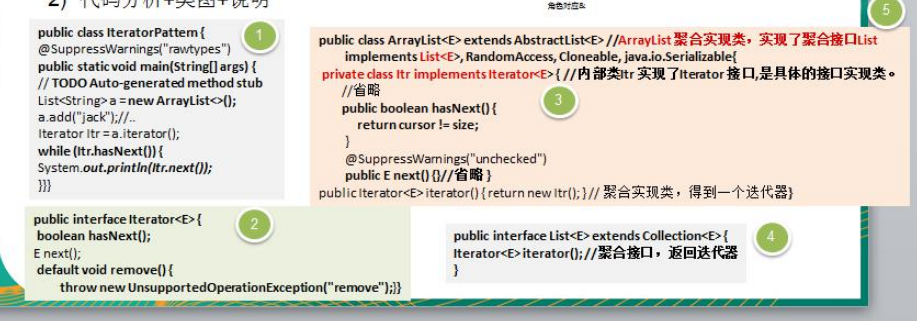
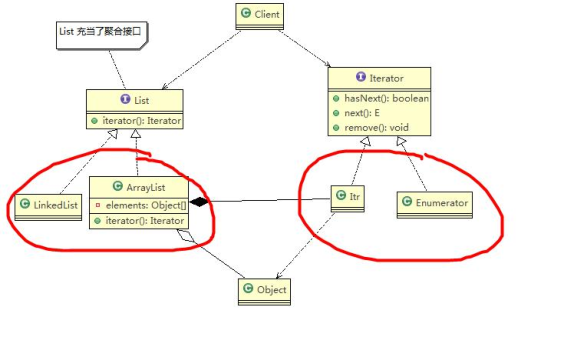
- 内部类 Itr 充当具体实现迭代器 Iterator 的类, 作为 ArrayList 内部类
- List 就是充当了聚合接口,含有一个 iterator () 方法,返回一个迭代器对象
- ArrayList 是实现聚合接口 List 的子类,实现了 iterator ()
- Iterator 接口系统提供
- 迭代器模式解决了 不同集合 (ArrayList ,LinkedList) 统一遍历问题
# 注意事项和细节
优点:
- 提供一个统一的方法遍历对象,客户不用再考虑聚合的类型,使用一种方法就可以遍历对象了。
- 隐藏了聚合的内部结构,客户端要遍历聚合的时候只能取到迭代器,而不会知道聚合的具体组成。
- 提供了一种 设计思想,就是一个类应该只有一个引起变化的原因(叫做单一责任原则)。在聚合类中,我们把迭代器分开,就是要把 管理对象集合和 遍历对象集合的责任分开,这样一来集合改变的话,只影响到聚合对象。而如果遍历方式改变的话,只影响到了迭代器。
- 当要展示一组相似对象,或者遍历一组相同对象时使用,适合使用迭代器模式
缺点:每个聚合对象都要一个迭代器,会生成多个迭代器不好管理类
编辑 (opens new window)
上次更新: 2023/12/13, 06:06:02