
 设计模式的概念
# 设计模式的概念
编写软件过程中,程序员面临着来自 耦合性,内聚性以及可维护性,可扩展性,重用性,灵活性 等多方面的 挑战,设计模式是为了让程序 (软件),具有更好
- 代码重用性 (即:相同功能的代码,不用多次编写)
- 可读性 (即:编程规范性,便于其他程序员的阅读和理解)
- 可扩展性 (即:当需要增加新的功能时,非常的方便,称为可维护)
- 可靠性 (即:当我们增加新的功能后,对原来的功能没有影响)
- 使程序呈现高内聚,低耦合的特性
- 设计模式包含了面向对象的精髓,“懂了设计模式,你就懂了面向对象分析和设计(OOA/D)的精要”
- Scott Mayers 在其巨著《Effective C++》就曾经说过:C++ 老手和 C++ 新手的区别就是前者手背上有很多伤疤
对接口编程而不是对实现编程。
优先使用对象组合而不是继承。
# 设计模式的基石
- 封装 继承 多态
- 顺序 判断 循环
# 三种类型设计模式
三种类型设计模式只是围绕着组件的生命周期来设计的。
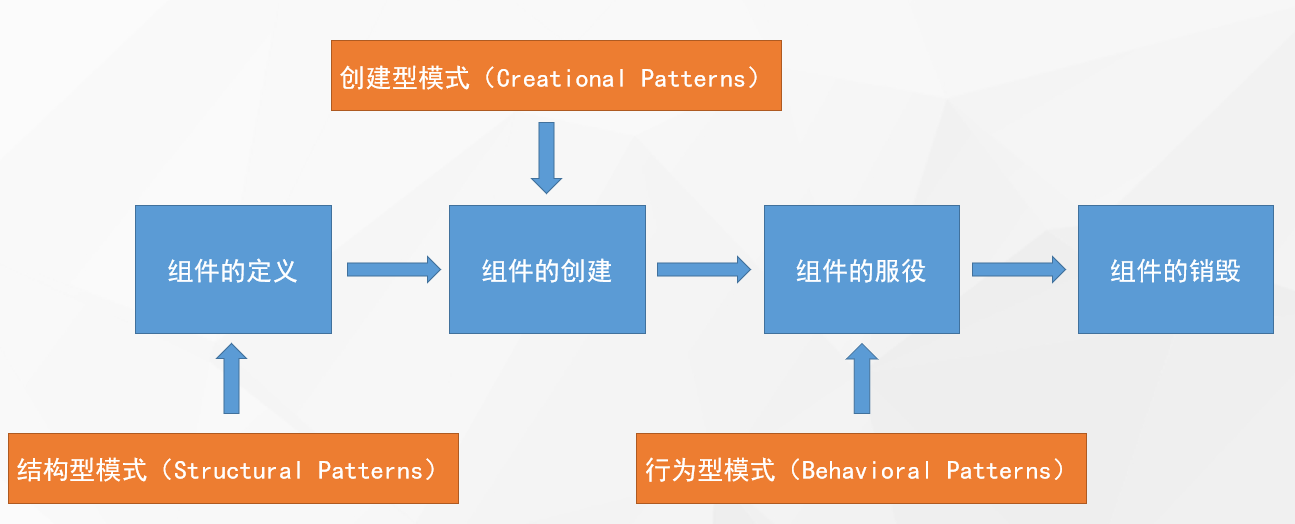
# 创建型模式(Creational Patterns)
- 单例(Singleton)模式
- 原型(Prototype)模式
- 工厂方法(FactoryMethod)模式
- 抽象工厂(AbstractFactory)模式
- 建造者(Builder)模式
# 结构型模式(Structural Patterns)
- 代理(Proxy)模式
- 适配器(Adapter)模式
- 桥接(Bridge)模式
- 装饰(Decorator)模式
- 外观(Facade)模式
- 享元(Flyweight)模式
- 组合(Composite)模式
- 过滤器模式(Filter Pattern)
# 行为型模式(Behavioral Patterns)
- 模板方法(Template Method)模式
- 策略(Strategy)模式
- 命令(Command)模式
- 职责链(Chain of Responsibility)模式
- 状态(State)模式
- 观察者(Observer)模式
- 中介者(Mediator)模式
- 迭代器(Iterator)模式
- 访问者(Visitor)模式
- 备忘录(Memento)模式
- 解释器(Interpreter)模式
# 设计的 7 大原则
设计模式原则,其实就是 程序员在编程时,应当遵守的原则,也是各种 设计模式的基础 (即: 设计模式为什么 这样设计的依据)
设计模式常用的七大原则有:
开闭原则(Open Closed Principle,OCP)
- 软件实体应当对扩展开放,对修改关闭(Software entities should be open for extension,but closed for modification)【即扩展新类而不是对通过修改旧类来实现新的功能】
- 合成复用原则、里氏替换原则相辅相成,都是开闭原则的具体实现规范
里氏替换原则(Liskov Substitution Principle,LSP)
- 继承必须确保超类所拥有的性质在子类中仍然成立(Inheritance should ensure that any property proved about supertype objects also holds for subtype objects)【继承父类而不去改变父类】
依赖倒置原则(Dependence Inversion Principle,DIP)
- 高层模块不应该依赖低层模块,两者都应该依赖其抽象;抽象不应该依赖细节,细节应该依赖抽象(High level modules shouldnot depend upon low level modules.Both should depend upon abstractions.Abstractions should not depend upon details. Details should depend upon abstractions)【面向接口编程,而不是面向实现类】
单一职责原则(Single Responsibility Principle,SRP)
- 一个类应该有且仅有一个引起它变化的原因,否则类应该被拆分(There should never be more than one reason for a class to change)【每个类只负责自己的事情,而不是变成万能】
接口隔离原则(Interface Segregation Principle,ISP)
一个类对另一个类的依赖应该建立在最小的接口上(The dependency of one class to another one should depend on the smallest possible interface)。【各个类建立自己的专用接口,而不是建立万能接口】
迪米特法则(Law of Demeter,LoD)
- 最少知识原则(Least Knowledge Principle,LKP)
- 只与你的直接朋友交谈,不跟 “陌生人” 说话(Talk only to your immediate friends and not to strangers)【无需直接交互的两个类,如果需要交互,使用中间者】 过度使用迪米特法则会使系统产生大量的中介类,从而增加系统的复杂性,使模块之间的通信效率降低
合成复用原则(Composite Reuse Principle,CRP)
又叫组合 / 聚合复用原则(Composition/Aggregate Reuse Principle,CARP)
软件复用时,要尽量先使用组合或者聚合等关联关系来实现,其次才考虑使用继承关系来实现。【优先组合(把对方当做属性来进行组合),其次继承】
# 单一职责原则
对类来说的, 即一个类应该只负责一项职责。如类 A 负责两个不同职责:职责 1,职责 2。当职责 1 需求变更 而改变 A 时,可能造成职责 2 执行错误,所以需要将类 A 的粒度分解为 A1,A2
以交通工具案例讲解
方案一:
public class SingleResponsibility1 {
    public static void main(String[] args) {
        // TODOAuto-generated method stub
        Vehicle vehicle = new Vehicle();
        vehicle.run("摩托车");
        vehicle.run("汽车");
        vehicle.run("飞机");
    }
}

// 交通工具类
// 方式 1
// 1. 在方式 1 的 run 方法中, 违反了单一职责原则
// 2. 解决的方案非常的简单,根据交通工具运行方法不同,分解成不同类即可
class Vehicle {
    public void run(String vehicle) {
        System.out.println(vehicle + " 在公路上运行....");
    }
}
2
3
4
5
6
7
8
9
10
11
12
13
14
15
16
17
18
19
方案 2
public class SingleResponsibility2 {
    public static void main(String[] args) {
        // TODOAuto-generated method stub
        RoadVehicle roadVehicle = new RoadVehicle();
        roadVehicle.run("摩托车");
        roadVehicle.run("汽车");
        AirVehicle airVehicle = new AirVehicle();
        airVehicle.run("飞机");
    }
}

//方案 2 的分析
//1. 遵守单一职责原则
//2. 但是这样做的改动很大,即将 类分解,同时修改客户端
//3. 改进:直接修改 Vehicle 类,改动的代码会比较少=>方案 3
class RoadVehicle {
    public void run(String vehicle) {
        System.out.println(vehicle + "公路运行");
    }
}
class AirVehicle {
    public void run(String vehicle) {
        System.out.println(vehicle + "天空运行");
    }
}
class WaterVehicle {
    public void run(String vehicle) {
        System.out.println(vehicle + "水中运行");
    }
}
2
3
4
5
6
7
8
9
10
11
12
13
14
15
16
17
18
19
20
21
22
23
24
25
26
27
28
29
30
方案 3
public class SingleResponsibility3 {
    public static void main(String[] args) {
// TODOAuto-generated method stub
        Vehicle2 vehicle2 = new Vehicle2();
        vehicle2.run("汽车");
        vehicle2.runWater("轮船");
        vehicle2.runAir("飞机");
    }
}
//方式 3 的分析
//1. 这种修改方法没有对原来的类做大的修改,只是增加方法
//2. 这里虽然没有在类这个级别上遵守单一职责原则,但是在方法级别上,仍然是遵守单一职责
class Vehicle2 {
    public void run(String vehicle) {
//处理
        System.out.println(vehicle + " 在公路上运行....");
    }
    public void runAir(String vehicle) {
        System.out.println(vehicle + " 在天空上运行....");
    }
    public void runWater(String vehicle) {
        System.out.println(vehicle + " 在水中行....");
    }
    //方法 2.
    //..
    //..
    //...
}
2
3
4
5
6
7
8
9
10
11
12
13
14
15
16
17
18
19
20
21
22
23
24
25
26
27
28
# 单一职责原则注意事项和细节
- 降低类的复杂度,一个类只负责一项职责。
- 提高类的可读性,可维护性
- 降低变更引起的风险
- 通常情况下,我们应当遵守单一职责原则,只有逻辑足够简单,才可以在代码级违反单一职责原则;只有类中 方法数量足够少,可以在方法级别保持单一职责原则
# 接口隔离原则 (Interface Segregation Principle)
客户端不应该依赖它不需要的接口,即 一个类对另一个类的依赖应该建立在最小的接口上
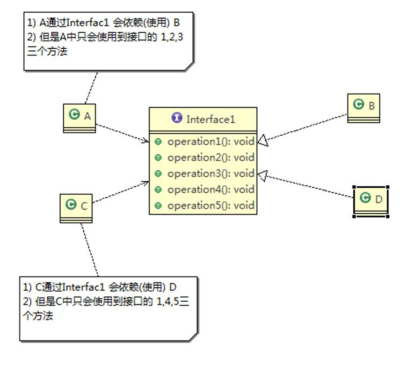
类 A 通过接口 Interface1 依赖类 B,类 C 通过接口 Interface1 依赖类 D,如果接口 Interface1 对于类 A 和类 C 来说不是最小接口,那么类 B 和类 D 必须去实现他们不需要的方法。
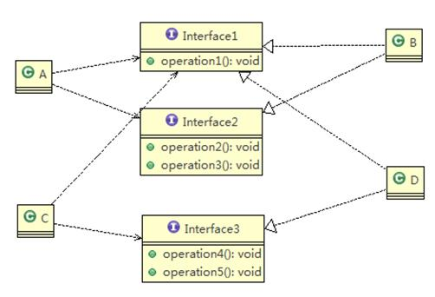
按隔离原则应当这样处理: 将接口 Interface1 拆分为 独立的几个接口 (这里我们拆分成 3 个接口),类 A 和类 C 分别与他们需要的接口建立依赖关系。也就是采用接口隔离原则
类 A 通过接口 Interface1 依赖类 B,类 C 通过接口 Interface1 依赖类 D,请编写代码完成此应用实例。
public class Segregation1 {
    public static void main(String[] args) {
// TODOAuto-generated method stub
    }
}
//接口
interface Interface1 {
    void operation1();
    void operation2();
    void operation3();
    void operation4();
    void operation5();
}
class B implements Interface1 {
    public void operation1() {
        System.out.println("B 实现了 operation1");
    }
    public void operation2() {
        System.out.println("B 实现了 operation2");
    }
    public void operation3() {
        System.out.println("B 实现了 operation3");
    }
    public void operation4() {
        System.out.println("B 实现了 operation4");
    }
    public void operation5() {
        System.out.println("B 实现了 operation5");
    }
}
class D implements Interface1 {
    public void operation1() {
        System.out.println("D 实现了 operation1");
    }
    public void operation2() {
        System.out.println("D 实现了 operation2");
    }
    public void operation3() {
        System.out.println("D 实现了 operation3");
    }
    public void operation4() {
        System.out.println("D 实现了 operation4");
    }
    public void operation5() {
        System.out.println("D 实现了 operation5");
    }
}
class A { //A 类通过接口 Interface1 依赖(使用) B 类,但是只会用到 1,2,3 方法
    public void depend1(Interface1 i) {
        i.operation1();
    }
    public void depend2(Interface1 i) {
        i.operation2();
    }
    public void depend3(Interface1 i) {
        i.operation3();
    }
}
class C { //C 类通过接口 Interface1 依赖(使用) D 类,但是只会用到 1,4,5 方法
    public void depend1(Interface1 i) {
        i.operation1();
    }
    public void depend4(Interface1 i) {
        i.operation4();
    }
    public void depend5(Interface1 i) {
        i.operation5();
    }
}
2
3
4
5
6
7
8
9
10
11
12
13
14
15
16
17
18
19
20
21
22
23
24
25
26
27
28
29
30
31
32
33
34
35
36
37
38
39
40
41
42
43
44
45
46
47
48
49
50
51
52
53
54
55
56
57
58
59
60
61
62
63
64
65
66
67
68
69
# 应传统方法的问题和使用接口隔离原则改进
- 类 A 通过接口 Interface1 依赖类 B,类 C 通过接口 Interface1 依赖类 D,如果接口 Interface1 对于类 A 和类 C 来说不是最小接口,那么类 B 和类 D 必须去实现他们不需要的方法
- 将接口 Interface1 拆分为独立的几个接口,类 A 和类 C 分别与他们需要的接口建立依赖关系。也就是采用接口 隔离原则
- 接口 Interface1 中出现的方法,根据实际情况拆分为 三个接口
代码实现
public class Segregation1 {
    public static void main(String[] args) {
// TODOAuto-generated method stub
// 使用一把
        Aa = newA();
        a.depend1(new B()); //A 类通过接口去依赖 B 类
        a.depend2(new B());
        a.depend3(new B());
        C c = new C();
        c.depend1(new D()); // C 类通过接口去依赖(使用)D 类
        c.depend4(new D());
        c.depend5(new D());
    }
}
// 接口 1
interface Interface1 {
    void operation1();
}
// 接口 2
interface Interface2 {
    void operation2();
    void operation3();
}
// 接口 3
interface Interface3 {
    void operation4();
    void operation5();
}
class B implements Interface1, Interface2 {
    public void operation1() {
        System.out.println("B 实现了 operation1");
    }
    public void operation2() {
        System.out.println("B 实现了 operation2");
    }
    public void operation3() {
        System.out.println("B 实现了 operation3");
    }
}
class D implements Interface1, Interface3 {
    public void operation1() {
        System.out.println("D 实现了 operation1");
    }
    public void operation4() {
        System.out.println("D 实现了 operation4");
    }
    public void operation5() {
        System.out.println("D 实现了 operation5");
    }
}
class A { //A 类通过接口 Interface1,Interface2 依赖(使用) B 类,但是只会用到 1,2,3 方法
    public void depend1(Interface1 i) {
        i.operation1();
    }
    public void depend2(Interface2 i) {
        i.operation2();
    }
    public void depend3(Interface2 i) {
        i.operation3();
    }
}
class C { // C 类通过接口 Interface1,Interface3 依赖(使用) D 类,但是只会用到 1,4,5 方法
    public void depend1(Interface1 i) {
        i.operation1();
    }
    public void depend4(Interface3 i) {
        i.operation4();
    }
    public void depend5(Interface3 i) {
        i.operation5();
    }
}
2
3
4
5
6
7
8
9
10
11
12
13
14
15
16
17
18
19
20
21
22
23
24
25
26
27
28
29
30
31
32
33
34
35
36
37
38
39
40
41
42
43
44
45
46
47
48
49
50
51
52
53
54
55
56
57
58
59
60
61
62
63
64
65
66
67
68
69
70
71
72
# 依赖倒转原则
依赖倒转原则 (Dependence Inversion Principle) 是指:
- 高层模块不应该依赖低层模块,二者都应该依赖其抽象
- 抽象不应该依赖细节,细节应该依赖抽象
- 依赖倒转 (倒置) 的中心思想是 面向接口编程
- 依赖倒转原则是基于这样的设计理念:相对于细节的多变性,抽象的东西要稳定的多。以抽象为基础搭建的架 构比以细节为基础的架构要稳定的多。在 java 中,抽象指的是接口或抽象类,细节就是具体的实现类
- 使用 接口或抽象类的目的是制定好 规范,而不涉及任何具体的操作,把 展现细节的任务交给他们的实现类去完成
请编程完成 Person 接收消息 的功能。
public class DependecyInversion {
    public static void main(String[] args) {
        Person person = new Person();
        person.receive(new Email());
    }
}
class Email {
    public String getInfo() {
        return "电子邮件信息: hello,world";
    }
}
//完成 Person 接收消息的功能
//方式 1 分析
//1. 简单,比较容易想到
//2. 如果我们获取的对象是 微信,短信等等,则新增类,同时 Perons 也要增加相应的接收方法
//3. 解决思路:引入一个抽象的接口 IReceiver, 表示接收者, 这样 Person 类与接口 IReceiver 发生依赖
// 因为 Email, WeiXin 等等属于接收的范围,他们各自实现 IReceiver 接口就 ok, 这样我们就符号依赖倒转原则
class Person {
    public void receive(Email email ) {
        System.out.println(email.getInfo());
    }
}
2
3
4
5
6
7
8
9
10
11
12
13
14
15
16
17
18
19
20
21
22
实现方案 2 (依赖倒转) + 分析说明
public class DependecyInversion {
    public static void main(String[] args) {
//客户端无需改变
        Person person = new Person();
        person.receive(new Email());
        person.receive(new WeiXin());
    }
}
//定义接口
interface IReceiver {
    public String getInfo();
}
class Email implements IReceiver {
    public String getInfo() {
        return "电子邮件信息: hello,world";
    }
}
//增加微信
class WeiXin implements IReceiver {
    public String getInfo() {
        return "微信信息: hello,ok";
    }
}
//方式 2
class Person {
//这里我们是对接口的依赖
    public void receive(IReceiver receiver ) {
        System.out.println(receiver.getInfo());
    }
}
2
3
4
5
6
7
8
9
10
11
12
13
14
15
16
17
18
19
20
21
22
23
24
25
26
27
28
29
30
# 依赖关系传递的三种方式和应用案例
- 接口传递
- 构造方法传递
- setter 方式传递
代码演示
public class DependencyPass {
    public static void main(String[] args) {
// TODOAuto-generated method stub
        ChangHong changHong = new ChangHong();
        // OpenAndClose openAndClose = new OpenAndClose();
        // openAndClose.open(changHong);
        // 通过构造器进行依赖传递
        // OpenAndClose openAndClose = new OpenAndClose(changHong);
        // openAndClose.open();
//通过 setter 方法进行依赖传递
        OpenAndClose openAndClose = new OpenAndClose();
        openAndClose.setTv(changHong);
        openAndClose.open();
    }
}

// 方式 1: 通过接口传递实现依赖
// 开关的接口
interface IOpenAndClose {
    public void open(ITV tv); //抽象方法,接收接口
}

interface ITV { //ITV 接口
    public void play();
}

class ChangHong implements ITV {

    @Override
    public void play() {
// TODOAuto-generated method stub
        System.out.println("长虹电视机,打开");
    }

}
// 实现接口
class OpenAndClose implements IOpenAndClose {
    public void open(ITV tv) {
        tv.play();
    }
}

// 方式 2: 通过构造方法依赖传递
interface IOpenAndClose {
    public void open(); //抽象方法
}
interface ITV { //ITV 接口
    public void play();
}
class OpenAndClose implements IOpenAndClose {
    public ITV tv; //成员
    public OpenAndClose(ITV tv) { //构造器
        this.tv = tv;
    }
    public void open() {
        this.tv.play();
    }
}

// 方式 3 , 通过 setter 方法传递
interface IOpenAndClose {
    public void open(); // 抽象方法
    public void setTv(ITV tv);
}
interface ITV { // ITV 接口
    public void play();
}
class OpenAndClose implements IOpenAndClose {
    private ITV tv;
    public void setTv(ITV tv) {
        this.tv = tv;
    }
    public void open() {
        this.tv.play();
    }
}
class ChangHong implements ITV {
    @Override
    public void play() {
// TODOAuto-generated method stub
        System.out.println("长虹电视机,打开");
    }
}
2
3
4
5
6
7
8
9
10
11
12
13
14
15
16
17
18
19
20
21
22
23
24
25
26
27
28
29
30
31
32
33
34
35
36
37
38
39
40
41
42
43
44
45
46
47
48
49
50
51
52
53
54
55
56
57
58
59
60
61
62
63
64
65
66
67
68
69
70
71
72
73
74
75
76
77
78
79
80
81
82
83
# 依赖倒转原则的注意事项和细节
- 低层模块尽量都要有抽象类或接口,或者两者都有,程序稳定性更好.
- 变量的 声明类型尽量是抽象类或接口,这样我们的变量引用和实际对象间,就存在 一个缓冲层,利于程序扩展 和优化
- 继承时遵循 里氏替换原则
# 里氏替换原则
- 里氏替换原则 (Liskov Substitution Principle) 在 1988 年,由麻省理工学院的以为姓里的女士提出的。
- 如果对每个类型为 T1 的对象 o1,都有类型为 T2 的对象 o2,使得以 T1 定义的所有程序 P 在所有的对象 o1 都代换成 o2 时,程序 P 的行为没有发生变化,那么类型 T2 是类型 T1 的子类型。 换句话说,所有引用基类的地方必须能透明地使用其子类的对象。
- 在使用继承时,遵循里氏替换原则,在 子类中尽量不要重写父类的方法
- 里氏替换原则告诉我们,继承实际上让两个类耦合性增强了,在适当的情况下,可以通过 聚合 , 组合 ,赖 依赖 来解决问题。
该看个程序,思考下问题和解决思路
public class Liskov {
    public static void main(String[] args) {
// TODOAuto-generated method stub
        Aa = newA();
        System.out.println("11-3=" + a.func1(11, 3));
        System.out.println("1-8=" + a.func1(1, 8));
        System.out.println("-----------------------");
        B b = new B();
        System.out.println("11-3=" + b.func1(11, 3));//这里本意是求出 11-3
        System.out.println("1-8=" + b.func1(1, 8));// 1-8
        System.out.println("11+3+9=" + b.func2(11, 3));
    }
}
//A 类
class A {
// 返回两个数的差
    public int func1(int num1, int num2) {
        return num1 - num2;
    }
}
// B 类继承了 A
// 增加了一个新功能:完成两个数相加,然后和 9 求和
class B extends A {
//这里,重写了 A 类的方法, 可能是无意识
    public int func1(int a, int b) {
        return a + b;
    }
    public int func2(int a, int b) {
        return func1(a, b) + 9;
    }
}
2
3
4
5
6
7
8
9
10
11
12
13
14
15
16
17
18
19
20
21
22
23
24
25
26
27
28
29
30
31
解决方法
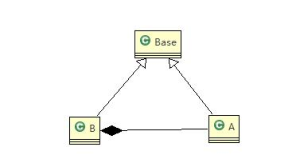
- 我们发现原来运行正常的相减功能发生了错误。原因就是类 B 无意中重写了父类的方法,造成原有功能出现错误。在实际编程中,我们常常会通过重写父类的方法完成新的功能,这样写起来虽然简单,但整个继承体系的复用性会比较差。特别是运行多态比较频繁的时候
- 通用的做法是: 原来的父类和子类都继承一个更通俗的基类,原有的继承关系去掉,采用 依赖 , 聚合 , 组合等关系代替。
public class Liskov {
    public static void main(String[] args) {
// TODOAuto-generated method stub
        Aa = newA();
        System.out.println("11-3=" + a.func1(11, 3));
        System.out.println("1-8=" + a.func1(1, 8));
        System.out.println("-----------------------");
        B b = new B();
//因为 B 类不再继承 A 类,因此调用者,不会再 func1 是求减法
//调用完成的功能就会很明确
        System.out.println("11+3=" + b.func1(11, 3));//这里本意是求出 11+3
        System.out.println("1+8=" + b.func1(1, 8));// 1+8
        System.out.println("11+3+9=" + b.func2(11, 3));
//使用组合仍然可以使用到 A 类相关方法
        System.out.println("11-3=" + b.func3(11, 3));// 这里本意是求出 11-3
    }
}
//创建一个更加基础的基类
class Base {
//把更加基础的方法和成员写到 Base 类
}
//A 类
class Aextends Base {
// 返回两个数的差
    public int func1(int num1, int num2) {
        return num1 - num2;
    }
}
// B 类继承了 A
// 增加了一个新功能:完成两个数相加,然后和 9 求和
class B extends Base {
//如果 B 需要使用 A 类的方法,使用组合关系
    privateAa = newA();
//这里,重写了 A 类的方法, 可能是无意识
    public int func1(int a, int b) {
        return a + b;
    }
    public int func2(int a, int b) {
        return func1(a, b) + 9;
    }
//我们仍然想使用 A 的方法
    public int func3(int a, int b) {
        return this.a.func1(a, b);
    }
}
2
3
4
5
6
7
8
9
10
11
12
13
14
15
16
17
18
19
20
21
22
23
24
25
26
27
28
29
30
31
32
33
34
35
36
37
38
39
40
41
42
43
44
45
# 开闭原则
- 开闭原则(Open Closed Principle)是编程中 最基础、最重要的设计原则
- 一个软件实体如类,模块和函数应该 对扩展开放 (对提供方),对 修改关闭 (对使用方)。用抽象构建框架,用实现扩展细节。
- 当软件需要变化时,尽量 通过扩展软件实体的行为来实现变化,而不是 通过修改已有的代码来实现变化。
- 编程中遵循其它原则,以及使用设计模式的目的就是遵循开闭原则。
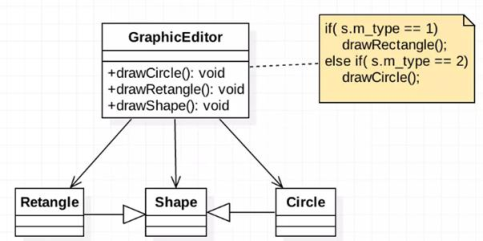
看一个画图形的功能。
public class Ocp {
    public static void main(String[] args) {
//使用看看存在的问题
        GraphicEditor graphicEditor = new GraphicEditor();
        graphicEditor.drawShape(new Rectangle());
        graphicEditor.drawShape(new Circle());
        graphicEditor.drawShape(new Triangle());
    }
}
//这是一个用于绘图的类 [使用方]
class GraphicEditor {
//接收 Shape 对象,然后根据 type,来绘制不同的图形
    public void drawShape(Shape s) {
        if (s.m_type == 1)
            drawRectangle(s);
        else if (s.m_type == 2)
            drawCircle(s);
        else if (s.m_type == 3)
            drawTriangle(s);
    }
//绘制矩形
    public void drawRectangle(Shape r) {
        System.out.println(" 绘制矩形 ");
    }
//绘制圆形
    public void drawCircle(Shape r) {
        System.out.println(" 绘制圆形 ");
    }
//绘制三角形
    public void drawTriangle(Shape r) {
        System.out.println(" 绘制三角形 ");
    }
}
//Shape 类,基类
class Shape {
    int m_type;
}
class Rectangle extends Shape {
    Rectangle() {
        super.m_type = 1;
    }
}
class Circle extends Shape {
    Circle() {
        super.m_type = 2;
    }
}
//新增画三角形
class Triangle extends Shape {
    Triangle() {
        super.m_type = 3;
    }
}
2
3
4
5
6
7
8
9
10
11
12
13
14
15
16
17
18
19
20
21
22
23
24
25
26
27
28
29
30
31
32
33
34
35
36
37
38
39
40
41
42
43
44
45
46
47
48
49
50
51
52
53
方式 1 的优缺点
- 优点是比较好理解,简单易操作。
- 缺点是违反了设计模式的 ocp 原则,即对扩展开放 (提供方),对修改关闭 (使用方)。即当我们给类增加新功能的时候,尽量不修改代码,或者尽可能少修改代码.
- 比如我们这时要新增加一个图形种类 三角形,我们需要做如下修改,修改的地方较多
# 改进的思路分析
思路:把创建 Shape 类做成抽象类,并提供一个 抽象的 draw 方法,让 子类去实现即可,这样我们有新的图形 种类时,只需要让新的图形类继承 Shape,并实现 draw 方法即可,修 使用方的代码就不需要修 -> 满足了开闭原则。
public class Ocp {
    public static void main(String[] args) {
//使用看看存在的问题
        GraphicEditor graphicEditor = new GraphicEditor();
        graphicEditor.drawShape(new Rectangle());
        graphicEditor.drawShape(new Circle());
        graphicEditor.drawShape(new Triangle());
        graphicEditor.drawShape(new OtherGraphic());
    }
}
//这是一个用于绘图的类 [使用方]
class GraphicEditor {
//接收 Shape 对象,调用 draw 方法
    public void drawShape(Shape s) {
        s.draw();
    }
}
//Shape 类,基类
abstract class Shape {
    int m_type;
    public abstract void draw();//抽象方法
}
class Rectangle extends Shape {
    Rectangle() {
        super.m_type = 1;
    }
    @Override
    public void draw() {
// TODOAuto-generated method stub
        System.out.println(" 绘制矩形 ");
    }
}
class Circle extends Shape {
    Circle() {
        super.m_type = 2;
    }
    @Override
    public void draw() {
// TODOAuto-generated method stub
        System.out.println(" 绘制圆形 ");
    }
}
//新增画三角形
class Triangle extends Shape {
    Triangle() {
        super.m_type = 3;
    }
    @Override
    public void draw() {
// TODOAuto-generated method stub
        System.out.println(" 绘制三角形 ");
    }
}
//新增一个图形
class OtherGraphic extends Shape {
    OtherGraphic() {
        super.m_type = 4;
    }
    @Override
    public void draw() {
// TODOAuto-generated method stub
        System.out.println(" 绘制其它图形 ");
    }
}
2
3
4
5
6
7
8
9
10
11
12
13
14
15
16
17
18
19
20
21
22
23
24
25
26
27
28
29
30
31
32
33
34
35
36
37
38
39
40
41
42
43
44
45
46
47
48
49
50
51
52
53
54
55
56
57
58
59
60
61
62
63
64
# 迪米特法则
- 一个对象应该对其他对象保持最少的了解
- 类与类关系越密切,耦合度越大
- 迪米特法则 (Demeter Principle) 又叫 最少知道原则,即一个类 对自己依赖的类知道的越少越好。也就是说,对于被依赖的类不管多么复杂,都尽量将逻辑封装在类的内部。对外除了提供的 public 方法,不对外泄露任何信息
- 迪米特法则还有个更简单的定义:只与直接的朋友通信
- 直接的朋友:每个对象都会与其他对象有 耦合关系,只要两个对象之间有耦合关系,我们就说这两个对象之间是朋友关系。耦合的方式很多,依赖,关联,组合,聚合等。其中,我们称出现 成员变量, 方法参数, 方法返回值中的类为直接的朋友,而出现在 局部变量中的类不是直接的朋友。也就是说,陌生的类最好不要以局部变量的形式出现在类的内部。
案例:
有一个学校,下属有各个学院和总部,现要求打印出学校总部员工 ID 和学院员工的 id
import java.util.ArrayList;
import java.util.List;
//客户端
public class Demeter1 {
    public static void main(String[] args) {
        //创建了一个 SchoolManager 对象
        SchoolManager schoolManager = new SchoolManager();
        //输出学院的员工 id 和 学校总部的员工信息
        schoolManager.printAllEmployee(new CollegeManager());
    }
}
//学校总部员工类
class Employee {
    private String id;
    public void setId(String id) {
        this.id = id;
    }
    public String getId() {
        return id;
    }
}
//学院的员工类
class CollegeEmployee {
    private String id;
    public void setId(String id) {
        this.id = id;
    }
    public String getId() {
        return id;
    }
}
//管理学院员工的管理类
class CollegeManager {
    //返回学院的所有员工
    public List<CollegeEmployee> getAllEmployee() {
        List<CollegeEmployee> list = newArrayList<CollegeEmployee>();
        for (int i = 0; i < 10; i++) { //这里我们增加了 10 个员工到 list
            CollegeEmployee emp = new CollegeEmployee();
            emp.setId("学院员工 id= " + i);
            list.add(emp);
        }
        return list;
    }
}
//学校管理类
//分析 SchoolManager 类的直接朋友类有哪些 Employee、CollegeManager
//CollegeEmployee 不是 直接朋友 而是一个陌生类,这样违背了 迪米特法则
class SchoolManager {
    //返回学校总部的员工
    public List<Employee> getAllEmployee() {
        List<Employee> list = newArrayList<Employee>();
        for (int i = 0; i < 5; i++) { //这里我们增加了 5 个员工到 list
            Employee emp = new Employee();
            emp.setId("学校总部员工 id= " + i);
            list.add(emp);
        }
        return list;
    }
    //该方法完成输出学校总部和学院员工信息(id)
    void printAllEmployee(CollegeManager sub) {
        //分析问题
        //1. 这里的 CollegeEmployee 不是 SchoolManager 的直接朋友
        //2. CollegeEmployee 是以局部变量方式出现在 SchoolManager
        //3. 违反了 迪米特法则
        //获取到学院员工
        List<CollegeEmployee> list1 = sub.getAllEmployee();
        System.out.println("------------学院员工------------");
        for (CollegeEmployee e : list1) {
            System.out.println(e.getId());
        }
        //获取到学校总部员工
        List<Employee> list2 = this.getAllEmployee();
        System.out.println("------------学校总部员工------------");
        for (Employee e : list2) {
            System.out.println(e.getId());
        }
    }
}
2
3
4
5
6
7
8
9
10
11
12
13
14
15
16
17
18
19
20
21
22
23
24
25
26
27
28
29
30
31
32
33
34
35
36
37
38
39
40
41
42
43
44
45
46
47
48
49
50
51
52
53
54
55
56
57
58
59
60
61
62
63
64
65
66
67
68
69
70
71
72
73
74
75
76
77
78
应用实例改进
- 前面设计的问题在于 SchoolManager 中,CollegeEmployee 类并不是 SchoolManager 类的直接朋友 (分析)
- 按照迪米特法则,应该避免类中出现这样非直接朋友关系的耦合
- 对代码按照迪米特法则 进行改进. (看老师演示)
import java.util.ArrayList;
import java.util.List;
//客户端
public class Demeter1 {
    public static void main(String[] args) {
        System.out.println("~~~使用迪米特法则的改进~~~");
        //创建了一个 SchoolManager 对象
        SchoolManager schoolManager = new SchoolManager();
        //输出学院的员工 id 和 学校总部的员工信息
        schoolManager.printAllEmployee(new CollegeManager());
    }
}
//学校总部员工类
class Employee {
    private String id;
    public void setId(String id) {
        this.id = id;
    }
    public String getId() {
        return id;
    }
}
//学院的员工类
class CollegeEmployee {
    private String id;
    public void setId(String id) {
        this.id = id;
    }
    public String getId() {
        return id;
    }
}
//管理学院员工的管理类
class CollegeManager {
    //返回学院的所有员工
    public List<CollegeEmployee> getAllEmployee() {
        List<CollegeEmployee> list = newArrayList<CollegeEmployee>();
        for (int i = 0; i < 10; i++) { //这里我们增加了 10 个员工到 list
            CollegeEmployee emp = new CollegeEmployee();
            emp.setId("学院员工 id= " + i);
            list.add(emp);
        }
        return list;
    }
    //输出学院员工的信息
    public void printEmployee() {
    //获取到学院员工
        List<CollegeEmployee> list1 = getAllEmployee();
        System.out.println("------------学院员工------------");
        for (CollegeEmployee e : list1) {
            System.out.println(e.getId());
        }
    }
}
//学校管理类
//分析 SchoolManager 类的直接朋友类有哪些 Employee、CollegeManager
//CollegeEmployee 不是 直接朋友 而是一个陌生类,这样违背了 迪米特法则
class SchoolManager {
    //返回学校总部的员工
    public List<Employee> getAllEmployee() {
        List<Employee> list = newArrayList<Employee>();
        for (int i = 0; i < 5; i++) { //这里我们增加了 5 个员工到 list
            Employee emp = new Employee();
            emp.setId("学校总部员工 id= " + i);
            list.add(emp);
        }
        return list;
    }
    //该方法完成输出学校总部和学院员工信息(id)
    void printAllEmployee(CollegeManager sub) {
        //分析问题
        //1. 将输出学院的员工方法,封装到 CollegeManager
        sub.printEmployee();
        //获取到学校总部员工
        List<Employee> list2 = this.getAllEmployee();
        System.out.println("------------学校总部员工------------");
        for (Employee e : list2) {
            System.out.println(e.getId());
        }
    }
}
2
3
4
5
6
7
8
9
10
11
12
13
14
15
16
17
18
19
20
21
22
23
24
25
26
27
28
29
30
31
32
33
34
35
36
37
38
39
40
41
42
43
44
45
46
47
48
49
50
51
52
53
54
55
56
57
58
59
60
61
62
63
64
65
66
67
68
69
70
71
72
73
74
75
76
77
78
79
80
81
# 迪米特法则注意事项和细节
- 迪米特法则的核心是降低类之间的耦合
- 但是注意:由于每个类都减少了不必要的依赖,因此迪米特法则只是要求降低类间 (对象间) 耦合关系, 并不是要求完全没有依赖关系
# 合成复用原则(Composite Reuse Principle)
原则是尽量使用合成 / 聚合的方式,而不是使用继承
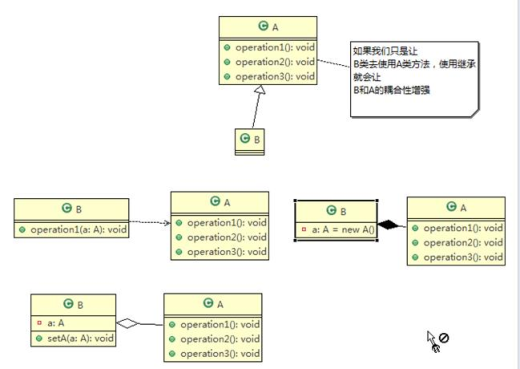
- 找出应用中可能需要变化之处,把它们独立出来,不要和那些不需要变化的代码混在一起。
- 针对接口编程,而不是针对实现编程。
- 为了交互对象之间的 松耦合设计而努力
# UML 类图
UML——Unified modeling language UML (统一建模语言),是一种用于软件系统分析和设计的语言工具,它用 于帮助软件开发人员进行思考和记录思路的结果。
UML 本身是一套符号的规定,就像数学符号和化学符号一样,这些符号用于描述软件模型中的各个元素和他 们之间的关系,比如类、接口、实现、泛化、依赖、组合、聚合等,如下图
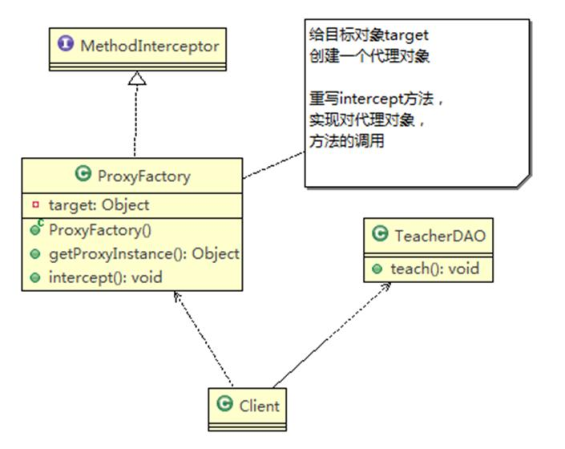
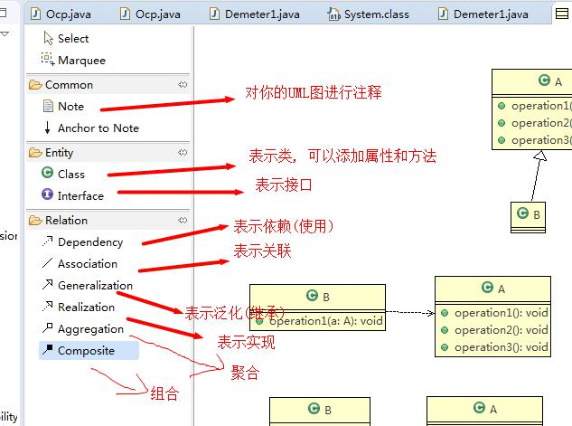
使用 UML 来建模,常用的工具有 Rational Rose , 也可以使用一些 插件来建模
# UML 图
- 用例图 (use case)
- 静态结构图: 类图、对象图、包图、组件图、部署图
- 动态行为图:交互图(时序图与协作图)、状态图、活动图
# UML 类图
- 用于描述系统中的 类 (对象) 本身的组成和类 ( 对象) 之间的各种静态关系。
- 类之间的关系: 依赖、泛化(继承)、实现、关联、聚合与组合。
public class Person { //代码形式->类图
    private Integer id;
    private String name;
    public void setName(String name) {
        this.name = name;
    }
    public String getName() {
        return name;
    }
}
2
3
4
5
6
7
8
9
10
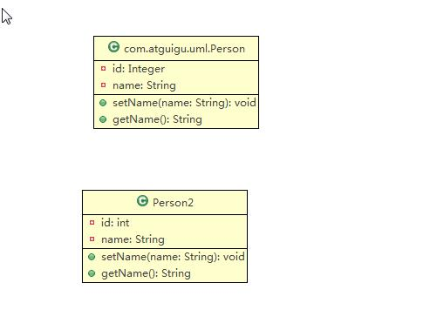
# 依赖关系(Dependence)
只要是在 类中用到了对方,那么他们之间就存在依赖关系。如果没有对方,连编绎都通过不了。
ublic class PersonServiceBean {
    private PersonDao personDao;//类
    public void save(Person person) {}
    public IDCard getIDCard(Integer personid) {}
    public void modify() {
        Department department = new Department();
    }
}
public class PersonDao {}
public class IDCard {}
public class Person {}
public class Department {}
2
3
4
5
6
7
8
9
10
11
12
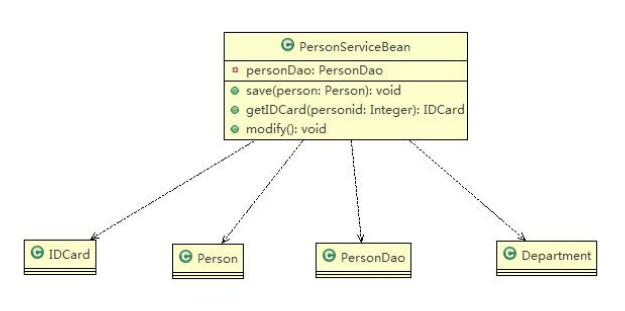
- 类中用到了对方
- 如果是 类的成员属性
- 如果是 方法的返回类型
- 是方法 接收的参数类型
- 方法中使用到
# 泛化关系 (generalization)
泛化关系实际上就是继承关系,他是 依赖关系的特例
public abstract class DaoSupport {
    public void save(Object entity) {
    }
    public void delete(Object id) {
    }
}
public class PersonServiceBean extends Daosupport {
}
2
3
4
5
6
7
8
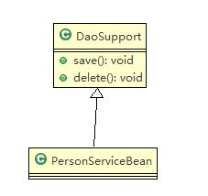
- 泛化关系实际上就是继承关系
- 如果 A 类继承了 B 类,我们就说 A 和 B 存在泛化关系
# 实现关系(Implementation)
实现关系实际上就是 是 A 类实现 B 接口,他是 依赖关系的特例
public interface PersonService {
    public void delete(Interger id);
}
public class PersonServiceBean implements PersonService {
    public void delete(Interger id) {}
}
2
3
4
5
6
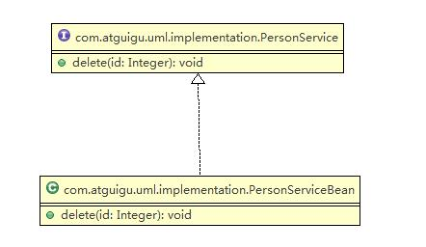
# 关联关系(Association)
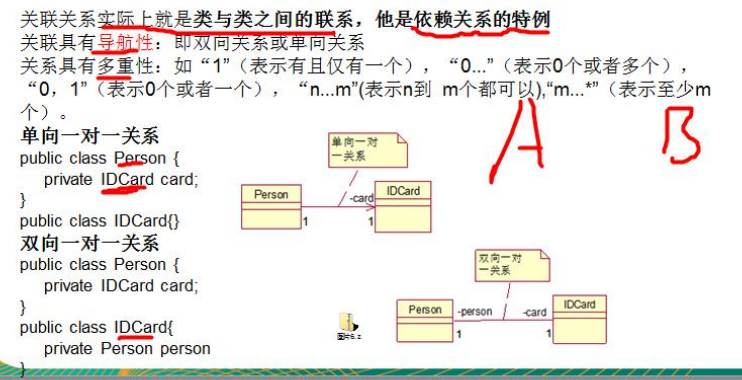
关联关系实际上就是类与类之间的联系,他是依赖关系的特例 关联具有导航性:即双同关系或单问关系 关系具有多重性:如 “1”(表示有且仅有一个),“0.”(表示 0 个或者多个)“0,1”(表示 0 个或者一个),“n.m”(表示 n 到 m 个都可以),“m.*”(表示至少 m 个)。
//单向一对一关系
public class Person {
    private IDCard card;
}
public class IDCard {}

//双向一对一关系
public class Person {
    private IDCard card;
}
public class IDCard {
    private Person person
}
2
3
4
5
6
7
8
9
10
11
12
13
# 聚合关系(Aggregation)
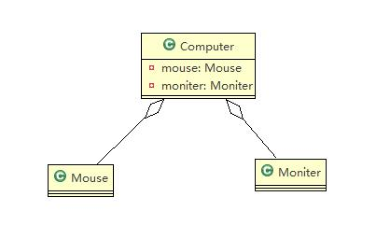
聚合关系(Aggregation)表示的是 整体和部分的关系, 整体与部分可以分开。聚合关系是 关联关系的特例,所 以他具有关联的 导航性与多重性。
如:一台电脑由键盘 (keyboard)、显示器 (monitor),鼠标等组成;组成电脑的各个配件是可以从电脑上分离出来 的,使用带空心菱形的实线来表示:
public class Computer {
    priate Mouse mouse;
    prate Monit or monitor;
    public void set Mouse(Mouse mouse) {
        this.mousemouse;
    }
    public void setMonitor(Monitor monitor)(
        this.monitor = monitor
}
2
3
4
5
6
7
8
9
# 组合关系(Composition)
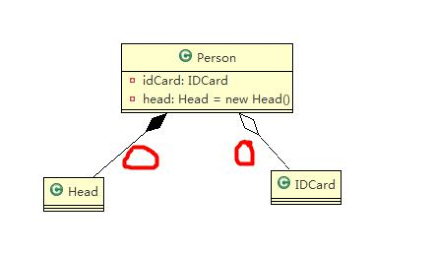
组合关系:也是整体与部分的关系,但是整体与部分不可以分开。 再看一个案例:在程序中我们定义实体:Person 与 IDCard、Head, 那么 Head 和 Person 就是 组合,IDCard 和 Person 就是聚合。 但是如果在程序中 Person 实体中定义了对 IDCard 进行级联删除,即删除 Person 时连同 IDCard 一起删除,那 么 IDCard 和 Person 就是组合了.
public class Person {
    private IDCard card;
    private Head head = new Head();
}
public class IDCard {}
public class Head {}
2
3
4
5
6
案例 2
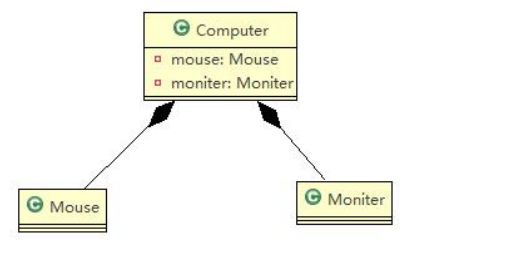
public class Computer {
    private Mouse mouse = new Mouse(); //鼠标可以和 computer 不能分离
    private Moniter moniter = new Moniter();//显示器可以和 Computer 不能分离
    public void setMouse(Mouse mouse) {
        this.mouse = mouse;
    }
    public void setMoniter(Moniter moniter) {
        this.moniter = moniter;
    }
}
public class Mouse {
}
public class Moniter {
}
2
3
4
5
6
7
8
9
10
11
12
13
14
# 设计模式概述
- 设计模式是程序员在面对同类软件工程设计问题所总结出来的有用的经验, 模式不是代码,而是 某类问题的通用解决方案,设计模式(Design pattern)代表了最佳的实践。这些解决方案是众多软件开发人员经过相当长的一段时间的试验和错误总结出来的。
- 设计模式的本质提高 软件的维护性,通用性和扩展性,并降低软件的复杂度。
- <<设计模式>> 是经典的书,作者是 Erich Gamma、Richard Helm、Ralph Johnson 和 John Vlissides Design(俗称 “四人组 GOF”)
- 设计模式并不局限于某种语言,java,php,c++ 都有设计模式.